
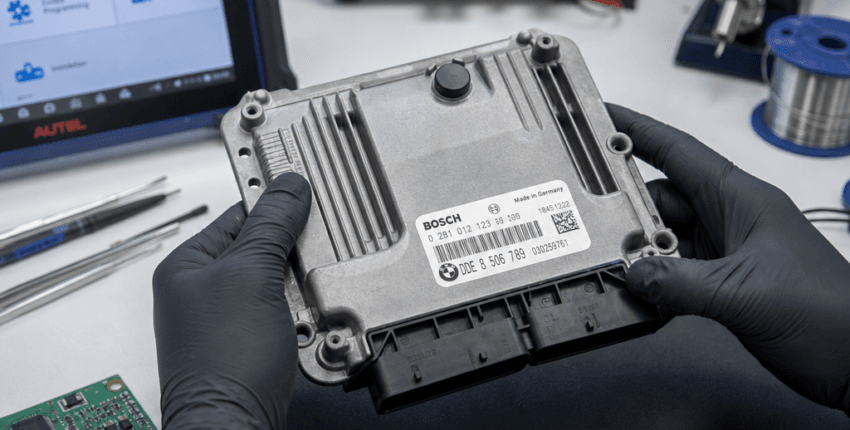
Most drivers searching for ECU programming Townsville have no idea there is a meaningful difference between programming and cloning. That confusion costs them time, money, and sometimes a vehicle that still will not start after the work is done. These are not interchangeable services. Choosing the wrong one means your ECU may reject the new configuration entirely. Or worse, your immobiliser will lock the vehicle permanently. At Twin Cities Auto, we see this mistake regularly, and this article exists to stop you from making it.
Table of Contents
- Quick Takeaways
- What Is ECU Programming and When Is It Required
- What Is ECU Cloning and When Does It Make Sense
- Key Differences That Determine Your Choice
- ECU Programming vs ECU Cloning vs ECU Repair: Side by Side
- Common Mistakes Townsville Drivers Make
- How Advanced Diagnostics Changes the Decision
- Frequently Asked Questions
- References
Quick Takeaways
| Key Insight | Explanation |
|---|---|
| Programming writes new data to a blank or replacement ECU | Used when fitting a new or remanufactured unit that has never been matched to your vehicle |
| Cloning copies your existing ECU data to another unit | Preserves immobiliser codes, mileage, and all module-specific calibrations without dealer relearn procedures |
| Not all workshops can do both correctly | Many Townsville workshops offer one but not the other, leading to mismatched advice |
| Immobiliser pairing is the critical factor | A programmed ECU from a donor vehicle will not start your car unless the immobiliser is also addressed |
| ECU repair is often the overlooked third option | Repairing your original unit avoids the cloning and programming question entirely and keeps VIN matching intact |
| Advanced diagnostics must come before any ECU decision | Assuming the ECU is the problem without proper scanning regularly wastes hundreds of dollars |
| Module programming applies beyond engine ECUs | Transmission control modules, ABS modules, and body control modules all require specific programming procedures |
What Is ECU Programming and When Is It Required
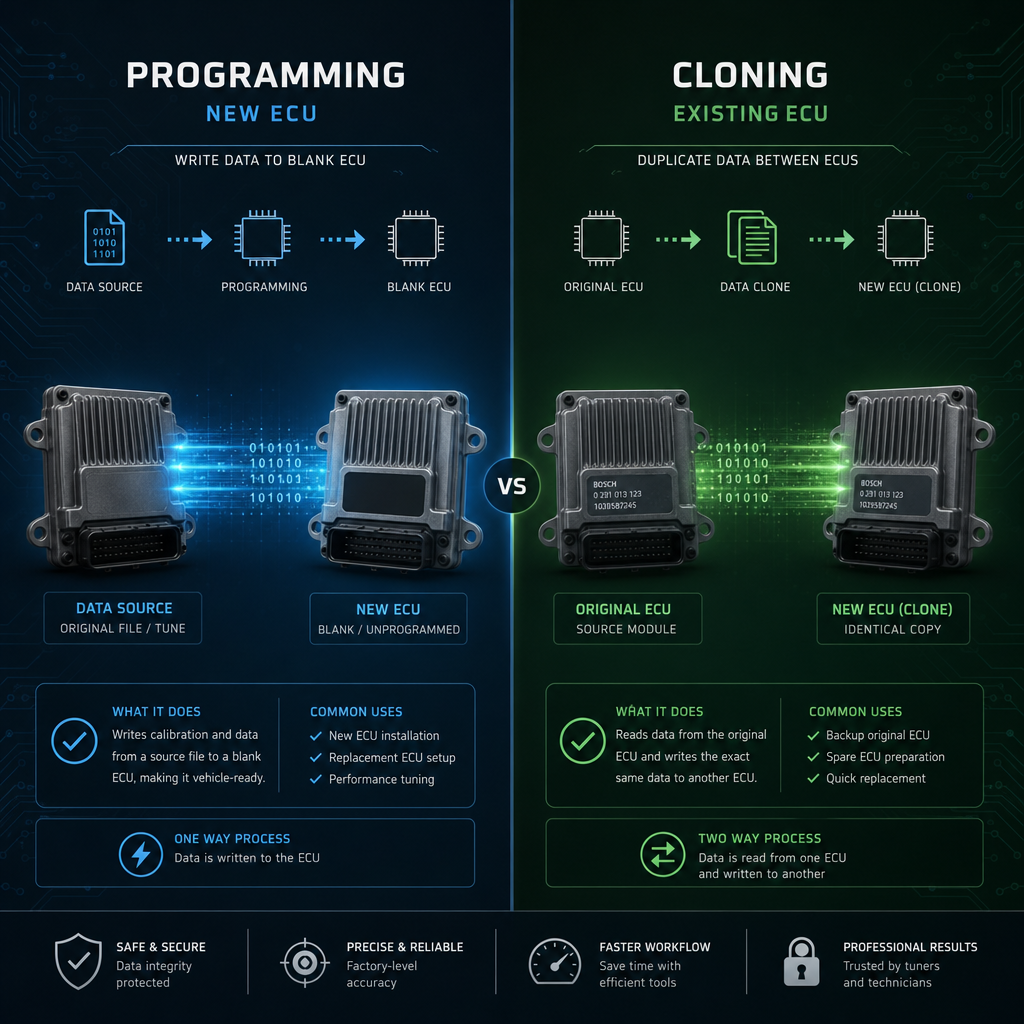
ECU programming is the process of writing software, calibration data, and vehicle-specific configuration into an engine control unit. This is required when you are fitting a brand-new ECU from the manufacturer, installing a remanufactured unit that has been wiped, or updating firmware to address a manufacturer-identified fault. The ECU needs to know the exact specifications of your engine variant, fuel type, transmission type, and emissions configuration before it will operate correctly.
In practice, programming a blank ECU for a Toyota LandCruiser 200 Series in Australia is a very different job to programming one for a European BMW or a Ford Ranger. Each vehicle has region-specific calibration files, and using a file from the wrong region causes drivability problems that look like hardware faults. This is why ECU programming Townsville requires access to OEM-level or professional aftermarket tooling, not generic off-the-shelf scanners.
When Programming Is the Right Call
Programming is the correct path when the original ECU is physically destroyed, when the manufacturer has released a software update that requires reflashing, or when you are building or modifying a vehicle and need a base tune loaded before custom calibration begins. It is also necessary after certain types of ECU repair when the internal memory has been wiped during the repair process.
A common mistake is ordering a second-hand ECU from a wrecking yard and assuming it just needs programming. A used ECU from another vehicle carries that vehicle’s immobiliser data, mileage, and VIN. Programming the software will not erase those linked identifiers. That is where cloning enters the picture.
What Is ECU Cloning and When Does It Make Sense
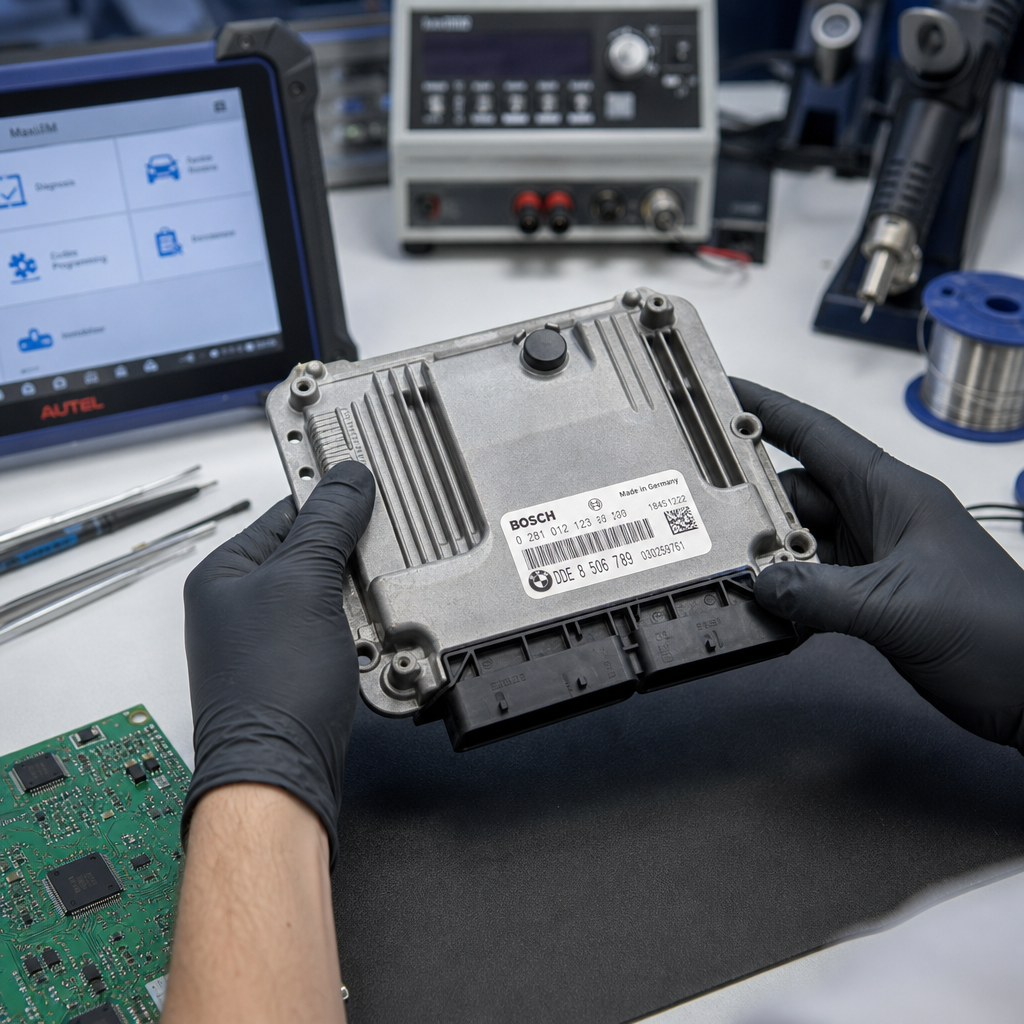
ECU cloning Townsville means reading every byte of data from your original ECU and writing an exact copy to a replacement unit. The result is a replacement ECU that is electronically identical to your original, including immobiliser synchronisation, mileage data, and all adaptive learning values the module has built up over time. The vehicle has no way of detecting that the ECU has been replaced.
This approach is particularly valuable when your original ECU has failed due to internal component damage but the data stored on it is still readable. Common causes of this kind of failure include water ingress, voltage spikes from jump-starting, corroded connector pins, or a failed internal voltage regulator. In these cases, the ECU board is damaged but the memory chips often survive.
Vehicles Where Cloning Avoids Major Headaches
European vehicles from brands like Mercedes-Benz, Audi, and BMW have deeply integrated immobiliser systems that make fitting a second-hand ECU without cloning almost impossible without dealer intervention. The same applies to many late-model Japanese vehicles including Nissan’s NATS system and Toyota’s Immobiliser system. Cloning bypasses the entire relearn and key-matching procedure because the replacement ECU already carries the correct security data.
Cloning is also the preferred method for ECU repair Townsville scenarios where a workshop repairs the donor board and needs to restore data from a backup. At Twin Cities Auto, we read the original data before any board-level repair begins, which means we can restore a fully functional ECU even if the repair process requires replacing memory components.
“The ADAS and electronic control systems in modern vehicles now represent over 40 percent of total vehicle manufacturing cost, and that proportion continues to rise as software complexity increases.” – McKinsey and Company, Future of Automotive Software report
Key Differences That Determine Your Choice
The single most important factor in deciding between programming and cloning is whether your original ECU data is recoverable. If it is, cloning is almost always faster, cleaner, and more reliable. If the data is gone because the memory chips are physically damaged, programming from scratch is the only option.
The second factor is immobiliser integration. Vehicles with security systems that store keys inside the ECU itself, rather than in a separate body control module or key transponder, require cloning to avoid a full dealer re-pin or key relearn. Attempting to program around this without the right tools results in a vehicle that cranks but will not start, or in some cases, a security lockout that requires a factory dealer reset.
Transmission Control Modules Follow the Same Rules
The programming versus cloning decision applies equally to automatic transmission repairs and programming. A replacement transmission control module on a ZF 8-speed or an Aisin-Warner unit needs either cloning from the original module or full programming with the correct vehicle-specific shift calibration data. Fitting a generic module without addressing this produces harsh shift behaviour, incorrect torque converter lockup, and fault codes that will not clear until the module is correctly configured.
At Twin Cities Auto, we handle transmission module programming and cloning for all major automatic transmission brands fitted to vehicles sold in Australia, including locally built Holdens and all imported vehicles.
Pro tip: Before authorising any ECU replacement at any workshop, ask specifically whether your vehicle’s immobiliser data will be preserved. If the workshop cannot answer that question clearly, find one that can.
ECU Programming vs ECU Cloning vs ECU Repair: Side by Side
Understanding where each service sits helps you ask the right questions and avoid paying for a service that does not actually solve your problem. The table below reflects real-world application across the vehicle types we service daily in Townsville.
| Factor | ECU Programming | ECU Cloning | ECU Repair |
|---|---|---|---|
| Original ECU data required | No | Yes, must be readable | Yes, preserved on original board |
| Immobiliser handling | Requires separate key relearn or dealer process | Automatically preserved in clone | No change, original data intact |
| Mileage and adaptive values | Reset to zero or base values | Fully preserved | Fully preserved |
| Best for | New ECU installs, firmware updates, modified builds | Failed ECU with recoverable data, sourced replacement units | Repairable hardware fault on original unit |
| VIN matching | Can be programmed to match | Automatically matches original | Unchanged, original VIN retained |
| Typical turnaround at Twin Cities Auto | Same day to 24 hours depending on calibration file availability | Same day in most cases | 1 to 3 days depending on component sourcing |
Common Mistakes Townsville Drivers Make
The data consistently shows that the majority of ECU-related problems that arrive at our workshop have already been partially worked on elsewhere. The most frequent mistake is purchasing a used ECU from an online wrecker, being told it just needs programming, and then discovering it will not synchronise with the immobiliser. That process costs time and money before the vehicle even arrives with us.
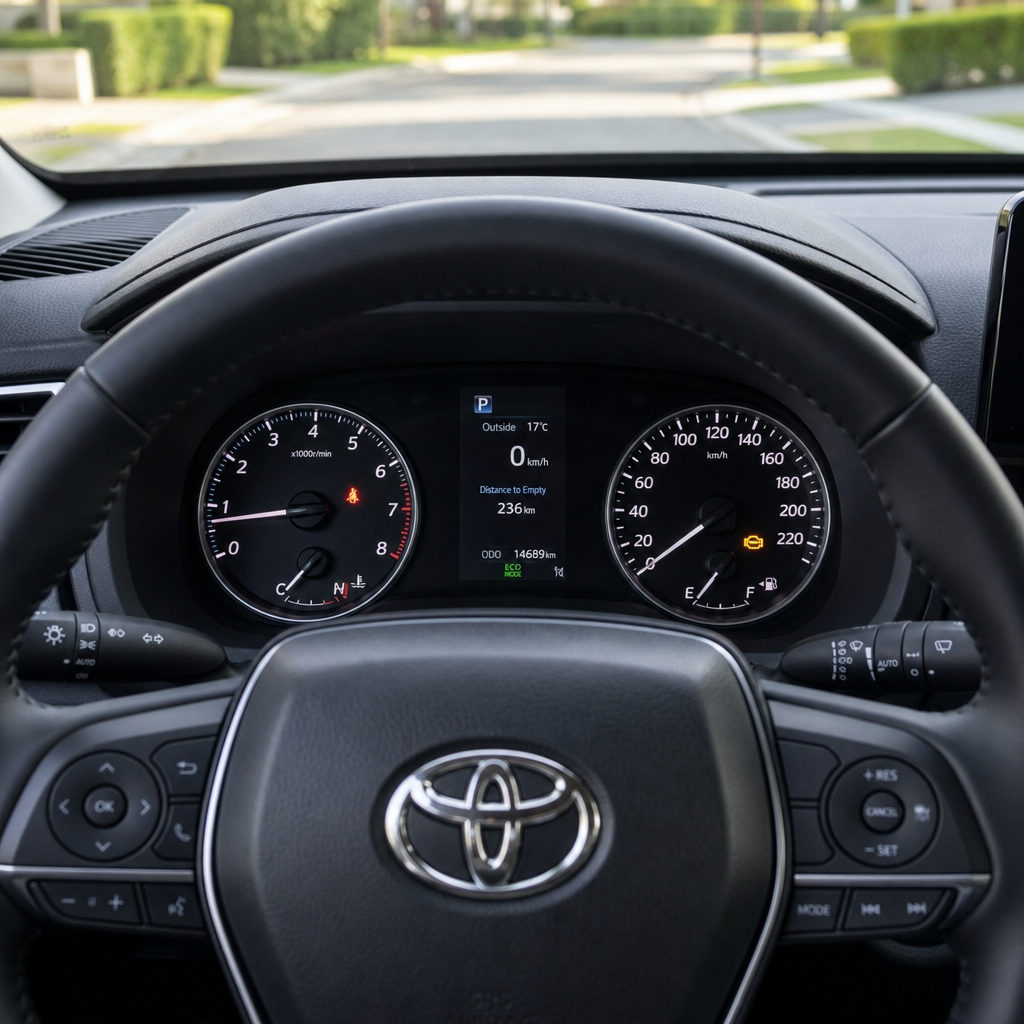
A second common error is assuming that a fault code pointing to the ECU means the ECU needs replacing. In practice, a significant percentage of ECU-related fault codes are caused by wiring faults, failed sensors, or corroded connectors rather than a failed ECU. Replacing the ECU without diagnosing the root cause means the new unit often develops the same fault within months.
Why Competitor Advice Sometimes Falls Short
Some workshops offering ECU cloning in Townsville have limited tooling that works well on common domestic vehicles but struggles with European platforms and late-model Asian imports. If a workshop cannot tell you which specific cloning hardware they use or which vehicle families it covers, that is a warning sign. Professional-grade cloning equipment from suppliers like Yanhua, Autel, or MPPS covers a far wider range of ECUs than consumer-grade tools, and the difference in success rate is significant.
At Twin Cities Auto, we invest in professional-grade equipment specifically because Townsville’s vehicle mix includes everything from mine-spec heavy vehicles to European prestige cars and late-model Japanese SUVs. One tool does not cover all of them adequately.
Pro tip: If a workshop quotes you for ECU cloning without first reading your original ECU to confirm the data is intact and the correct clone procedure exists for your specific ECU part number, ask them to do that check first. Skipping it is how jobs fail.
How Advanced Diagnostics Changes the Decision
Advanced diagnostics is not just scanning for fault codes. At Twin Cities Auto, it means reading live data streams from every module on the vehicle network, comparing those values against manufacturer specifications, and identifying whether a fault is in the ECU itself, in a peripheral module, or in the wiring between them. This step routinely changes the recommended course of action.
A vehicle that arrives with a no-start condition and a suspected failed ECU will, in a meaningful number of cases, have a faulty crankshaft position sensor, a failing fuel pump relay, or a communication fault on the CAN bus that makes the ECU appear dead. Full network diagnostics identifies this before any ECU work is authorised.
Module Programming Beyond the Engine ECU
Modern vehicles have between 30 and 100 individual electronic control modules depending on specification level. ABS modules, airbag control units, body control modules, and instrument clusters all have their own programmable data. When any of these modules is replaced, it requires the same programming or cloning consideration as the engine ECU. Failing to address this is why some vehicles have persistent warning lights or non-functional features after repairs that were described as complete.
This is an area where Twin Cities Auto has a clear advantage over general repairers in Townsville. We program and clone across the full vehicle module network, not just engine ECUs, which means a complete repair rather than a partial one.
Frequently Asked Questions
Can any ECU be cloned regardless of vehicle make or age?
Not every ECU is cloneable with current tools. Some late-model ECUs use encrypted memory that resists standard reading procedures, and some manufacturers have introduced security measures specifically to prevent cloning outside the dealer network. In those cases, programming with an OEM file is the alternative. The only way to confirm cloneability for your specific unit is to have it assessed by a workshop with professional-grade reading equipment, which is exactly what we do before quoting any job.
Will ECU cloning affect my odometer reading or service history?
ECU cloning copies your original mileage data to the replacement unit, so the odometer reading on the cloned ECU will match your original. Whether that reading is also stored in the instrument cluster or body control module depends on the vehicle. On many modern vehicles, mileage is stored across multiple modules simultaneously, which means a cloned ECU alone does not change what the instrument cluster displays. We check all relevant modules as part of the cloning process.
How do I know if my ECU needs programming, cloning, or just repair?
Start with a full advanced diagnostic scan. If the ECU is communicating on the network but producing incorrect data, repair is often the right path. If it has failed completely but the board is physically intact, cloning to a known-good replacement is usually the fastest solution. If the board is destroyed and no data can be recovered, programming a new or blank unit is the only option. We make this determination at the diagnostic stage so you are not paying for unnecessary work.
Is ECU cloning legal in Australia?
Cloning your own vehicle’s ECU for the purpose of replacing a failed unit is legal in Australia. It is a repair procedure, not a modification to vehicle specifications. What falls outside legal and compliance boundaries is using cloning to alter odometer data or to create vehicles with fraudulent identities. At Twin Cities Auto, every cloning job is performed as a direct like-for-like repair and documented accordingly.
How long does ECU programming or cloning take at Twin Cities Auto?
Most ECU cloning jobs are completed the same day, often within a few hours once the vehicle is in the workshop. ECU programming turnaround depends on whether the correct calibration file is immediately available for your vehicle’s specific region and variant. For common Australian-market vehicles, same-day turnaround is standard. For unusual imports or heavily modified vehicles requiring custom base files, the timeline extends to 24 to 48 hours. We give you a realistic timeframe at the diagnostic stage, not after the work has started.
Do you handle ECU programming and cloning for commercial and mining vehicles in Townsville?
Yes. A significant portion of our ECU programming and repair work covers commercial fleets, agricultural machinery, and mine-specification vehicles that operate throughout North Queensland. These vehicles often run specialist electronic configurations that general automotive repairers cannot program correctly. We have the tooling and the specific calibration files for heavy vehicle ECUs including those from Cummins, Caterpillar, and major Japanese commercial vehicle manufacturers.
Have you had an ECU programming or cloning job go wrong at another workshop, or do you have a question about your specific vehicle situation? Share it below and we will give you a straight answer.
References
- McKinsey and Company research on automotive software complexity and electronic system cost growth in modern vehicles
- Statista automotive electronics market data covering ECU adoption rates and vehicle electronic system growth globally
- Forbes coverage of automotive technology trends including the increasing role of software-defined vehicles and ECU architecture
- Australian Government Department of Infrastructure vehicle standards and modification compliance information relevant to ECU work on Australian-registered vehicles
- SAE International technical standards and research on vehicle electronic control unit programming procedures and automotive cybersecurity.