
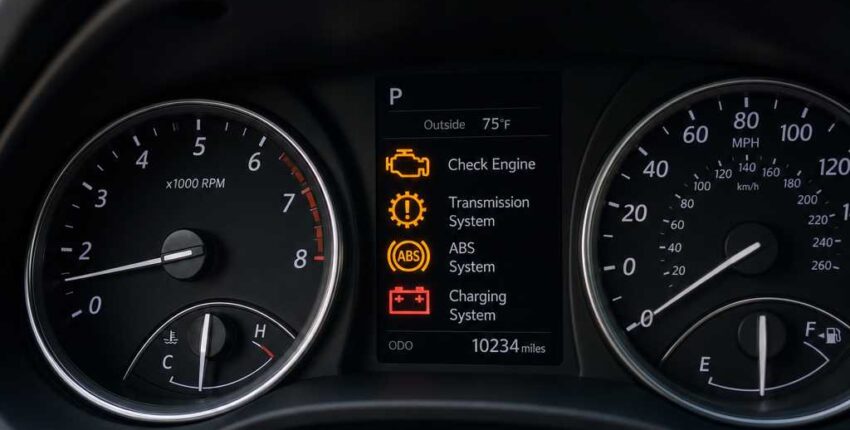
Most drivers assume a quick code read at their local auto parts store tells them everything they need to know. It does not. Generic OBD-II scanners pull surface-level fault codes, but they miss the deeper electronic faults that are quietly destroying modules, transmissions, and control units. At Twin Cities Auto in Townsville, we see vehicles every week where a basic scan missed the real problem entirely. If your vehicle is showing any of the five warning signs below, you need advanced vehicle diagnostics Townsville specialists, not just a code reader from a shelf.
Table of Contents
- Quick Takeaways
- Warning Sign 1: Faults That Come and Go Without Pattern
- Warning Sign 2: Multiple Warning Lights Appearing at Once
- Warning Sign 3: Erratic Transmission Behaviour
- Warning Sign 4: No Codes Present But Clear Symptoms Remain
- Warning Sign 5: Replaced Parts That Still Do Not Work
- Basic Code Read vs Advanced Diagnostics: What is the Real Difference
- Diagnostic Approach Comparison
- Frequently Asked Questions
- References
Quick Takeaways
| Key Insight | Explanation |
|---|---|
| Intermittent faults are the hardest to catch with basic tools | A generic scan only reads live or stored codes. Intermittent electronic faults often leave no code at all until the module fails completely. |
| Multiple warning lights usually signal a network communication fault | When several systems light up together, the root cause is almost always a CAN bus or module communication failure, not multiple separate faults. |
| Erratic transmission behaviour needs more than a transmission code read | Electronic transmission faults require live data streaming, solenoid testing, and TCM programming checks that basic scanners cannot perform. |
| No-code symptoms are a red flag for failing modules | A module can malfunction badly and still not trigger a stored fault code. Advanced diagnostics captures this through live parameter monitoring. |
| A new part that does not fix the problem usually needs programming | Replacement ECUs, modules, and sensors must be programmed and initialised to the specific vehicle. Generic fitting does not work. |
| Townsville workshops with OEM-level tooling produce faster, accurate repairs | Generic aftermarket scan tools lack manufacturer-specific data. OEM and professional diagnostic platforms access all control modules and live data channels. |
| Advanced diagnostics saves money compared to parts-swapping | Replacing parts without a confirmed diagnosis wastes hundreds or thousands of dollars. Pinpoint diagnostics identifies the exact fault first. |
Warning Sign 1: Faults That Come and Go Without Pattern
Intermittent faults are the most misdiagnosed problems in the automotive industry. The vehicle acts up on the road, then behaves perfectly the moment you drive it into a workshop. A basic code reader connected at that point will show nothing, and the technician will send you home saying they found no fault. That is not a diagnosis. That is a missed diagnosis.
In practice, intermittent electronic faults are almost always caused by failing module internals, degraded wiring harness connections, or voltage supply issues that only manifest under specific load or temperature conditions. The data consistently shows that these faults require advanced vehicle diagnostics Townsville tools capable of logging live data streams over time, capturing freeze-frame data, and monitoring module communication on the vehicle’s CAN bus network in real time.
At Twin Cities Auto, we use professional-grade diagnostic platforms that can be left logging while the vehicle is test-driven. If the fault appears, the exact operating conditions at that moment are recorded. That is how intermittent faults get solved permanently, not by guessing and replacing parts.
Pro tip: If your vehicle only plays up on the highway or after it has been running for 20 minutes, ask your workshop specifically whether they can perform a data-logging road test. If they cannot, you need a different workshop.


Warning Sign 2: Multiple Warning Lights Appearing at Once
When a single warning light appears, it is easy to assume one isolated problem. When three or four warning lights appear together, most drivers panic and most basic workshops get confused. The truth is straightforward: multiple simultaneous warning lights almost never mean multiple separate faults.
What they almost always mean is a network communication fault. Modern vehicles use a Controller Area Network (CAN bus) to allow every control module to communicate with every other. When one module stops communicating correctly, or when the power supply to the network drops, every module that depends on that network can trigger a warning light simultaneously.
Why Basic Scanners Get This Wrong
A common mistake is connecting a generic OBD-II reader and reading each fault code in isolation. The technician sees a body control module fault, an ABS fault, and an airbag fault, and starts replacing components one by one. Every one of those faults is a symptom of the same underlying network failure. Without a diagnostic tool that can map the entire vehicle network and identify which module is the source of the communication breakdown, the root cause never gets addressed.
Our team in Townsville uses manufacturer-level scan tools that interrogate every module on the network simultaneously. We can see which module is not responding, which is sending incorrect signals, and where the communication fault originates. That is the only reliable way to resolve multi-light fault scenarios.
Pro tip: If your check engine light, ABS light, and traction control light all came on at the same time after a bump or after the battery went flat, do not let anyone replace ABS sensors or traction control components before a full network scan has been performed.
Warning Sign 3: Erratic Transmission Behaviour
Harsh gear changes, unexpected downshifts, slipping between gears, or a transmission that seems to hunt for the right gear are all electronic faults until proven otherwise. Too many vehicles in Townsville get sent to a transmission rebuilder before anyone checks whether the transmission control module (TCM) is functioning correctly or whether it needs reprogramming.
Electronic automatic transmissions in modern vehicles are controlled by a TCM that adjusts shift points, solenoid pressures, torque converter lockup, and adaptive shift data based on hundreds of sensor inputs. A single miscalibration, corrupted adaptive data, or failing solenoid driver inside the TCM can produce every one of those drivability symptoms without any mechanical damage to the transmission itself.
What Advanced Diagnostics Reveals in Transmission Faults
Advanced diagnostics for transmission faults involves live streaming of TCM data, including solenoid duty cycles, turbine speed sensor values, output speed signals, and adaptive pressure tables. If the adaptive data has become corrupted, the fix is a TCM reset and recalibration, not a transmission rebuild. If the TCM itself has failed internally, electronic transmission repair and TCM programming is the correct path, not mechanical strip-down.
Twin Cities Auto specialises in electronic transmission diagnostics and programming for all vehicle brands in Australia. We regularly see vehicles that were quoted thousands of dollars for transmission rebuilds, where the actual fault was a TCM programming issue resolved in a fraction of that cost.
“The most expensive repair is always the wrong repair. Accurate electronic diagnosis before any mechanical intervention is not optional, it is the only professional standard.” – Twin Cities Auto Diagnostic Team, Townsville
Warning Sign 4: No Codes Present But Clear Symptoms Remain
This is the scenario that frustrates drivers most. The vehicle is clearly not right. The engine hesitates, the fuel economy has dropped sharply, or something feels wrong with the power steering or braking system. But every time the vehicle gets scanned, the technician says there are no fault codes and sends it home.

Here is what is actually happening. The OBD-II fault code system only triggers a stored code when a sensor reading falls outside a pre-programmed threshold for a defined period of time. A module or sensor that is degrading but has not yet crossed that threshold will produce real drivability symptoms without ever generating a fault code.
Live Parameter Monitoring Changes the Outcome
The correct diagnostic approach for a no-code symptom is live parameter monitoring, not a static code pull. By watching actual sensor values in real time, during the exact driving conditions that produce the symptom, a skilled technician can identify sensors producing erratic or out-of-range readings that the fault code system has not yet flagged.
In practice, the most common no-code faults we find at Twin Cities Auto involve mass airflow sensors producing fluctuating readings, crankshaft position sensors with intermittent signal gaps, and body control modules with internal faults that affect multiple convenience systems without triggering stored codes. Auto electrical repairs Townsville customers are often surprised that the fix was straightforward once the correct diagnostic process was applied.
Warning Sign 5: Replaced Parts That Still Do Not Work
This warning sign is expensive and preventable. A vehicle comes in with a fault. A part is identified as the probable cause. The part is replaced. Nothing changes. This cycle is one of the most common reasons Townsville drivers end up at our workshop after visiting another repairer first.
The reason replacement parts often fail to fix the problem is not the part. It is the process. Electronic module repair Townsville work requires that any replacement control module, ECU, sensor cluster, or electronic component be programmed to the specific vehicle it is being fitted to. This includes VIN coding, key pairing, immobiliser calibration, and in many cases adaptive learning resets.
ECU Cloning and Programming as the Correct Solution
When an ECU or control module fails, the options are replacement with a new unit that requires full manufacturer-level programming, or ECU cloning, where the data from the original unit is transferred to a replacement unit to preserve all vehicle-specific calibrations. Both processes require specialist equipment and software. Neither can be done with a generic scan tool.
Twin Cities Auto is equipped to clone, program, and initialise ECUs and modules for all vehicle brands sold in Australia. If you have had a part replaced and the fault persists, there is a strong likelihood that the programming step was either skipped or performed incorrectly. Bring the vehicle in for a full diagnostic review before any more parts are purchased.
Basic Code Read vs Advanced Diagnostics: What is the Real Difference
Understanding this difference is what separates a correct repair from an expensive guessing game. A basic OBD-II code read takes roughly 60 seconds. It pulls stored fault codes from the engine control module and, depending on the tool, one or two other modules. It tells you what has been flagged, not what caused it, not what the live operating conditions are, and not whether any other module in the vehicle is communicating correctly.
Advanced vehicle diagnostics is a structured, systematic process. It begins with a full vehicle network scan across every module. It continues with live data analysis, waveform testing, and in many cases guided functional testing that activates specific actuators and solenoids to verify correct operation. The outcome is a confirmed, root-cause diagnosis, not a list of codes to throw parts at.
For a vehicle diagnostic specialist Townsville assessment, the investment in proper diagnostics almost always costs less than a single incorrectly replaced component. The data from our workshop consistently supports this.
Diagnostic Approach Comparison
| Diagnostic Approach | What It Accesses | Best Suited For |
|---|---|---|
| Generic OBD-II Code Read (auto parts store or basic scanner) | Engine control module fault codes only. No live data streaming. No module network scan. | Identifying basic engine fault codes before a service. Not suitable for complex faults or multiple modules. |
| Workshop-Level Multi-System Scan (mid-tier aftermarket tools) | Multiple module fault codes. Limited live data. Does not access manufacturer-specific parameters or perform functional tests. | General service pre-checks. Identifying obvious stored faults across several systems. Insufficient for electronic module faults. |
| OEM and Professional Advanced Diagnostics (Twin Cities Auto Townsville) | Full vehicle network scan across all modules. Live data streaming. CAN bus communication analysis. Functional actuator testing. ECU programming and calibration capability. | Intermittent faults, no-code symptoms, module failures, transmission electronics, ECU programming, cloning, and all complex electronic faults. |
Frequently Asked Questions
What is the difference between a basic code read and advanced vehicle diagnostics in Townsville?
A basic code read retrieves stored fault codes from a limited number of modules, typically only the engine control module. Advanced vehicle diagnostics in Townsville involves a full network scan of every module in the vehicle, live data monitoring across all systems, CAN bus communication analysis, and functional testing. The difference in diagnostic capability is substantial, and for any electronic fault beyond a simple engine sensor code, advanced diagnostics is the only approach that reliably identifies the root cause.
Why does my check engine light keep coming back after it has been cleared?
A check engine light that returns after being cleared means the underlying fault has not been repaired, only the stored code has been deleted. Clearing a code without fixing the fault is not a repair. The correct process is to identify the root cause through advanced diagnostics, complete the actual repair, verify the fix through live data monitoring, and then confirm the code does not return after a full drive cycle. If your check engine light in Townsville keeps returning, the fault has not been properly diagnosed or repaired.
Can electronic module faults be repaired without replacing the entire module?
Yes, in many cases electronic modules can be repaired rather than replaced. Circuit board faults, failed capacitors, damaged driver transistors, and corrupted software can often be addressed through module repair rather than full replacement. When a module does need to be replaced, ECU cloning transfers the original calibration data to the replacement unit, preserving all vehicle-specific programming. Twin Cities Auto performs both module repair and cloning for all vehicle brands across Australia.
How do I know if my transmission problem is electronic or mechanical?
The reliable answer requires advanced diagnostics, not guesswork. Electronic transmission faults produce symptoms including harsh shifts, incorrect gear selection, hunting between gears, and limp mode, all of which are identical to symptoms produced by mechanical wear. The correct process is a full electronic diagnostic of the transmission control module, solenoid testing, and live data analysis before any mechanical inspection. At Twin Cities Auto, we diagnose the transmission electronics first. This approach regularly identifies TCM programming or solenoid faults that do not require any mechanical work at all.
What vehicles do you perform advanced diagnostics on in Townsville?
Twin Cities Auto performs advanced diagnostics, electronic module repair, ECU cloning and programming, and auto electrical repairs on all vehicle brands sold in Australia. This includes European brands such as BMW, Mercedes-Benz, Audi, and Volkswagen, Japanese brands including Toyota, Nissan, Mitsubishi, Subaru, and Honda, as well as American, Korean, and domestic commercial vehicles. We are equipped with both OEM and professional multi-brand diagnostic platforms to cover every vehicle network architecture in use in Australia.
Is advanced diagnostics worth it if my car is older?
Yes. Older vehicles still have complex electronic systems, and the cost of unnecessary parts replacement on an older vehicle is proportionally more damaging to its value. Advanced diagnostics on an older vehicle identifies exactly what is wrong before any money is spent on parts. In practice, older vehicles with electronic faults benefit significantly from module repair and cloning services because replacement units for older models are often unavailable new, making the repair-and-retain approach both practical and economical.
Have you experienced one of these warning signs with your vehicle? Share what happened and whether the first workshop you visited got it right, or whether it took advanced diagnostics to finally find the answer.
References
- United States National Highway Traffic Safety Administration: vehicle safety standards and electronic systems regulation
- SAE International: automotive engineering standards for OBD systems and electronic control modules
- Statista: automotive industry data on vehicle electronic complexity and repair cost trends
- Forbes: analysis of automotive technology advancement and the cost of diagnostic errors in vehicle repair
- Australian Department of Infrastructure, Transport, Regional Development, Communications and the Arts: vehicle standards and compliance for Australian registered vehicles