
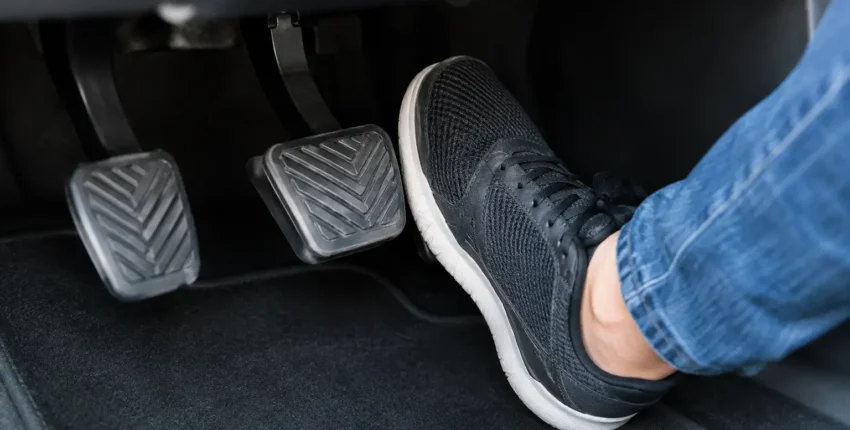
A brake pedal should feel firm and predictable. If it pulses, shudders or pushes back against your foot as you slow down, it is reasonable to ask: what causes brake pedal vibration? Often, the issue is related to brake-disc wear or heat, but the true cause can also involve the calipers, wheel hubs, ABS system or suspension.
The key is noticing when the vibration happens. A pedal that pulses only under hard braking needs a different investigation from one that shakes at low speed, appears after a recent brake repair, or comes with a warning light. Getting the diagnosis right helps avoid replacing parts that are not actually at fault.
What causes brake pedal vibration during braking?
In many vehicles, brake pedal vibration occurs because the braking surfaces are no longer meeting evenly. When you press the pedal, the brake pads clamp onto the rotating discs. If the disc has uneven thickness, excessive run-out or an uneven transfer layer of pad material, the clamping force changes as the wheel turns. That variation travels through the hydraulic system and can be felt as a pulse through the pedal.
People often call this “warped discs”. Heat can be part of the story, particularly after repeated heavy braking, towing, descending a range or driving with a sticking caliper. However, discs do not always physically bend in the way the term suggests. In many cases, the problem is uneven disc thickness or pad material deposited in patches on the disc face. The result still feels much the same from the driver’s seat: a pedal that pulses while braking.
The vibration may be most noticeable from motorway or highway speeds as you slow down. You may also feel a shudder through the steering wheel. If the steering wheel shakes, the front brakes, front tyres, wheel hubs or front suspension deserve close attention. If the pedal pulses but the steering remains fairly steady, rear brake components or the brake hydraulic system may be more relevant. These are clues, not a final diagnosis.
Brake discs, pads and heat damage
Brake discs and pads work as a matched set. A disc with grooves, hard spots, corrosion, cracking or thickness variation cannot provide a smooth, consistent braking surface. Fitting new pads to a damaged disc can lead to noise, poor bedding-in and a returning vibration.
Overheating is a common contributor. A caliper that does not release properly can keep a pad lightly dragging on the disc. This creates constant heat, accelerates wear and can leave the disc discoloured or uneven. A vehicle may also pull to one side, smell hot after a drive, or have one wheel noticeably hotter than the others. These symptoms should be checked promptly, as a dragging brake can reduce stopping performance and damage more than just the pads.
Cheap or unsuitable friction materials can also contribute to braking concerns, although they are not automatically the cause. The correct pad compound depends on the vehicle, how it is used and the condition of the existing brake hardware. A family SUV that regularly tows, for example, places different demands on its brakes than a lightly used commuter car.
Disc replacement is sometimes the sensible repair, but machining may be possible on certain vehicles if the disc remains safely above its minimum thickness and is otherwise in good condition. The decision should be based on accurate measurements, not guesswork.
Wheel hub condition and wheel-nut tension matter
A new brake disc relies on a clean, true mounting surface. Rust, dirt or debris trapped between the disc and hub can create run-out from the start. The disc then rotates slightly out of true, and pedal pulsation can develop or return soon after a repair.
Wheel nuts also need to be tightened evenly to the manufacturer’s specification. Uneven or excessive tightening, often from an impact gun without final torque checking, can place uneven stress on the disc and hub assembly. This is one reason a proper brake inspection looks beyond the visible pad thickness.
Caliper faults and worn brake hardware
A brake caliper uses pistons and sliding sections to apply pressure evenly across the pads. If slider pins seize, a piston sticks, or mounting hardware is worn, one pad may do more work than the other. That can create uneven disc wear, brake drag, noise and vibration.
Brake hoses can occasionally cause similar symptoms. An internally damaged hose may restrict fluid returning from a caliper, allowing the brake to remain partially applied after the pedal is released. It is less common than disc or pad issues, but it is the sort of fault that requires a proper inspection rather than a parts-only approach.
Rear brake problems should not be overlooked. Depending on the vehicle, rear discs, drum brakes, an electronic parking brake or a rear caliper issue can create a pulsation felt mainly through the pedal or seat. Some vehicles distribute braking force differently according to load and driving conditions, so the location of the vibration alone does not prove which axle is responsible.
Could ABS cause the brake pedal to vibrate?
Yes – and sometimes it is doing exactly what it should.
During a hard stop on loose gravel, wet roads or a slippery surface, the anti-lock braking system can rapidly apply and release brake pressure to help prevent wheel lock-up. This often produces a fast pedal pulsation, mechanical noise and a sensation that the pedal is pushing back at your foot. Keep firm, steady pressure on the pedal and steer where it is safe to do so. Do not pump the brakes.
ABS activation should be brief and linked to a low-grip braking event. If the pedal vibrates during normal, gentle braking on dry bitumen, or the ABS warning light is on, the system needs checking. A faulty wheel-speed sensor, damaged sensor wiring, contaminated tone ring or wheel-bearing issue can provide incorrect speed information to the ABS module. Modern vehicles store fault codes and live data that can help identify which circuit is behaving abnormally, but codes are only one part of a complete diagnosis.
This is particularly relevant for late-model vehicles, where braking, stability control, electronic parking brakes and other safety systems are closely connected. Replacing a sensor without confirming the wiring, wheel-bearing condition and signal quality can waste money and leave the original fault unresolved.
Tyres, wheels and suspension can feel like brake vibration
Not every shudder felt while braking begins inside the brake system. An out-of-balance wheel or damaged tyre can cause vibration at certain speeds, while worn suspension bushes, ball joints, control arms or steering components can allow the wheel to move excessively when braking force is applied.
The difference is often in the pattern. Tyre or wheel imbalance is commonly felt while cruising at a particular speed, even when you are not braking. Brake-disc-related vibration usually appears or becomes much stronger only as the brakes are applied. Worn suspension may make the vehicle wander, clunk over bumps, pull under brakes or feel unsettled through the steering.
A qualified inspection should consider all of these possibilities. It is possible to have more than one issue at once, especially on vehicles that travel rough roads, carry loads, tow trailers or have missed regular servicing.
When brake pedal vibration needs urgent attention
Do not put off an inspection if vibration is severe, suddenly worsening or paired with a brake warning light. The same applies if the vehicle pulls sharply under braking, makes grinding noises, smells hot, has a soft or sinking pedal, or needs noticeably more distance to stop.
If the vehicle is difficult to control or braking performance feels reduced, it is safer not to drive it. Arrange assistance rather than attempting to nurse it across Townsville in traffic. Brake faults can progress quickly when heat, metal-to-metal contact or a hydraulic issue is involved.
For a mild but repeatable pedal pulsation, book the vehicle in soon rather than waiting for the next service. Early inspection may identify an uneven disc, sticking caliper or loose suspension component before it damages additional parts.
How a proper brake vibration diagnosis works
A reliable diagnosis starts with listening to the driver’s description: the speed at which the vibration occurs, whether the steering wheel shakes, whether it happens only after the brakes are hot, and whether warning lights have appeared. A road test may be appropriate, followed by a physical inspection of pads, discs, calipers, hoses, hubs, tyres and suspension components.
Technicians can measure disc thickness and run-out, inspect the hub mounting face, check caliper movement and assess pad wear patterns. On vehicles with ABS concerns, diagnostic equipment can check stored faults and compare wheel-speed signals. This methodical approach is more useful than assuming every brake vibration needs discs and pads.
At Twin Cities Automotive, any recommended repair can be explained in plain language before work goes ahead. You should know what has caused the vibration, which parts need attention now and whether there are any related items worth planning for.
A smooth, confident brake pedal is something you should be able to take for granted. If yours is vibrating, have it checked while the symptoms are still clear – accurate diagnosis now can protect your braking performance, your budget and the people travelling with you.