
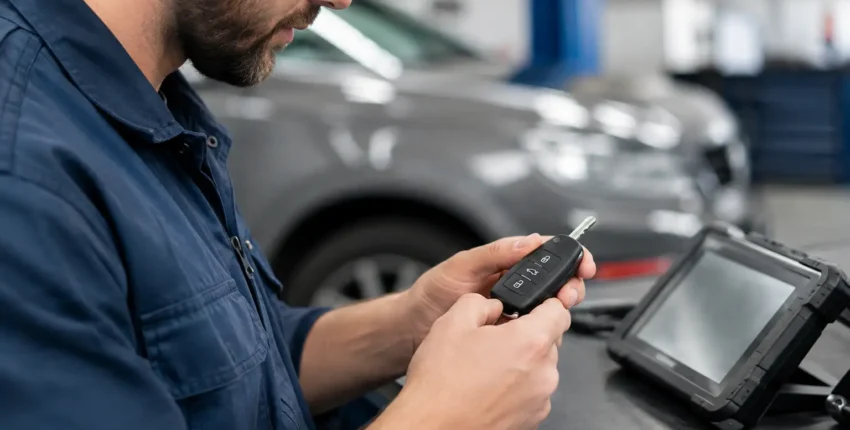
A spare key is rarely on a driver’s mind until the only working one is lost, damaged or suddenly will not start the car. So, can mechanics program car keys? In many cases, yes – provided the workshop has the right diagnostic equipment, security access and trained technicians for your particular vehicle.
Modern car keys are more than a cut piece of metal. Most contain a transponder chip, remote-control electronics or a proximity fob that must be recognised by the vehicle’s immobiliser system. Programming is the process of securely matching that key or fob to the car so it can start, lock and operate as intended.
For Townsville motorists, the practical answer is that a suitably equipped independent workshop can often handle key and fob programming without a dealership visit. However, the job depends on the make, model, year, key type and whether you still have a working key.
Can mechanics program car keys for any vehicle?
Not every mechanic can, and not every vehicle can be programmed in the same way. A workshop that focuses mainly on routine mechanical servicing may not have the scan tools, software subscriptions or manufacturer security credentials needed for late-model key programming. This is especially true for European vehicles, push-button-start systems and cars with tightly controlled anti-theft programming.
A workshop with advanced auto electrical and diagnostic capability may be able to program keys for a wide range of petrol, diesel, hybrid and electric vehicles. Dealer-level diagnostic equipment can communicate with the body control module, engine computer and immobiliser system, identify what type of key the car requires, and carry out the correct programming procedure.
That does not mean every key job is straightforward. Some manufacturers require online security authorisation before a new key can be added. Others need a PIN or security code, while certain vehicles may require the vehicle to be present for an extended programming process. Where a dealer-only procedure applies, a reputable workshop should explain that clearly rather than promise a quick fix it cannot deliver.
What car key programming actually involves
The key blade is only one part of the job. It may unlock the door, but a car with an immobiliser will not start unless the electronic chip is correctly paired with the vehicle. Depending on the vehicle, programming may involve adding a new key to the existing system, erasing missing keys for security, synchronising remote locking functions, or programming a replacement module after an electrical repair.
For a conventional transponder key, the technician connects a diagnostic tool to the vehicle and follows the manufacturer-specific security process. The new chip is then registered to the immobiliser. With a smart key or proximity fob, the process can also include remote locking, keyless entry and push-button start functions.
The best outcome is not simply a key that starts the engine once in the workshop. It is a key that starts the vehicle consistently, locks and unlocks correctly, has been checked for fault codes and is recorded properly in the vehicle’s security system.
A replacement key is not always a ready-to-use key
Buying an inexpensive key or fob online can appear to save money, but it can create complications. The blade may be poorly cut, the chip may not be compatible, or the remote frequency may be wrong for an Australian-delivered vehicle. Some aftermarket fobs are suitable when sourced carefully; others cannot be programmed at all.
A workshop can often assess a customer-supplied key, but cannot always guarantee its quality or compatibility. In some cases, supplying the correct key through established parts channels is the more reliable option. It can avoid paying for programming time only to find the replacement unit is faulty.
When the job is more difficult
Having one working key usually makes the process faster and less costly. The technician can use it to confirm the correct key type and, on many models, add a second authorised key without resetting the whole system. It is also a sensible time to remove any lost or stolen keys from the vehicle memory.
An all-keys-lost situation is different. The vehicle may need to be transported to the workshop, proof of ownership will be required, and the programming process can be more involved. Depending on the model, the technician may need to retrieve security information, access modules directly or complete an online manufacturer procedure.
Water damage, a flat fob battery and worn buttons can also look like programming faults when they are not. Likewise, an immobiliser warning light may point to a damaged key, but it could also be caused by a wiring fault, a failing antenna ring, a body control module issue or a weak vehicle battery. Proper diagnosis matters because replacing and programming keys unnecessarily does not fix an underlying electrical fault.
Signs you may need key or fob programming
A key programming issue is possible when the engine cranks but will not start and an immobiliser or key symbol appears on the dash. It may also be needed after purchasing an additional key, replacing a damaged fob, replacing certain electronic control modules, or when the remote functions no longer communicate with the car.
But the symptoms overlap with other faults. A remote that works intermittently may only need a quality battery fitted correctly. A vehicle that will not detect a smart key might have interference, a low 12-volt battery or a fault in the keyless-entry system. Starting with a scan and a clear test plan avoids guessing.
At Twin Cities Automotive, key and fob programming is approached as an electronic vehicle service, not just a key-cutting task. That means checking the vehicle’s condition and fault information before recommending work, then seeking customer approval before any service proceeds.
What to bring to a key programming appointment
Security is central to key programming, so a legitimate workshop will ask for identification and proof that you own or are authorised to deal with the vehicle. Bring all working keys and fobs, not just the new one. Some vehicles require every key to be present during programming, and any key left at home may no longer work afterwards if the system is reset.
It also helps to provide the vehicle identification number, registration details and a clear explanation of what happened. Mention whether a key was lost, stolen, wet, dropped or stopped working after a battery replacement. These details can change the diagnostic path and help the technician protect the vehicle from unauthorised access.
If the car cannot be started, do not repeatedly crank it or force the key into the ignition. Repeated attempts can flatten the battery and complicate diagnosis. Arrange safe transport if needed, particularly when the vehicle is immobilised away from home.
Dealer versus independent workshop: what is the difference?
A dealership may be the required option for some brands or security systems, particularly on the newest models. It has direct manufacturer access and may hold specific key stock. The trade-off can be longer booking times, higher pricing or a less flexible approach where the problem is not simply a missing key.
A capable independent specialist can be an excellent alternative when it has current diagnostic equipment, access to the required programming information and experience with the vehicle. The benefit is often a more direct diagnostic process: the workshop can investigate whether the failure is the key, the immobiliser, the vehicle battery or an electrical module, then provide a repair plan based on evidence.
Ask practical questions before booking. Can the workshop program keys for your make and model? Can it supply the correct key if needed? Does it diagnose immobiliser faults as well as program fobs? Will it contact you with costs before starting? Clear answers are a good sign that the work will be handled properly.
A programmed spare key is inexpensive insurance compared with the disruption of losing the only one. If your remaining key is worn, intermittent or held together with tape, arrange an assessment while the vehicle can still be driven – it is usually the easiest time to put a reliable backup in your hand.