
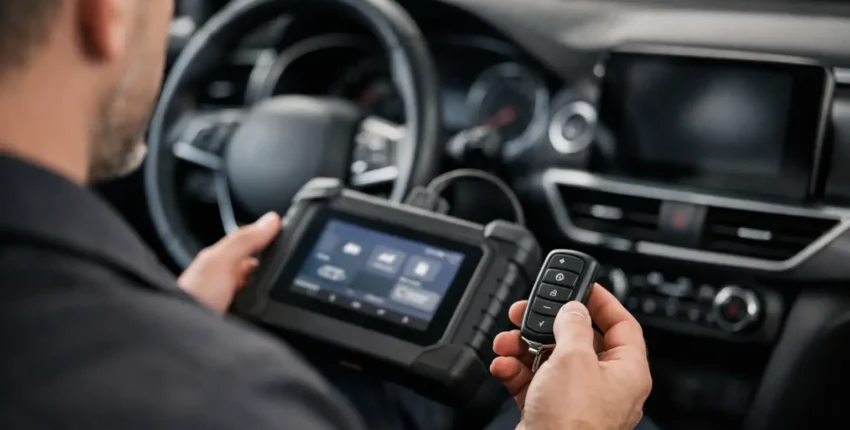
A key fob that suddenly stops working can turn a normal school run, work day or trip out of town into a frustrating problem. Car key fob programming is often the answer, but it is not always as simple as fitting a new battery or buying a replacement remote online. Modern vehicle keys are part remote control, part security device and, in many late-model vehicles, part computer system.
For North Queensland motorists, getting the fault identified properly matters. A remote that will not lock the doors may have a flat battery. A vehicle that will not start may have an immobiliser issue, a damaged key transponder, a vehicle battery problem or a fault within the car itself. Replacing parts before the cause is clear can create unnecessary expense.
What car key fob programming actually does
A conventional remote key sends a signal to lock and unlock the vehicle. Most modern keys also contain a transponder chip, which communicates with the immobiliser. If the vehicle does not recognise that chip, the engine may crank but not start, or it may not crank at all.
Car key fob programming matches a new or existing key to the vehicle’s electronic security system. Depending on the make, model and key type, this can involve programming remote locking functions, registering an immobiliser transponder, coding a proximity smart key or synchronising a key after a module replacement.
These are related functions, but they are not always the same job. A key can unlock the doors yet fail to start the car. It can also start the car while the remote buttons do nothing. Identifying which function has failed prevents the common mistake of paying for a replacement key when a simple repair, battery change or vehicle-side fault is responsible.
Signs your key or fob may need attention
Intermittent operation is often the first warning sign. You may need to stand unusually close to the vehicle before the buttons respond, the spare key may work while the main key does not, or the dash may display a key or immobiliser warning. In push-button-start vehicles, a message such as “key not detected” can point to a fob battery, antenna, smart-key or programming issue.
Programming may also be needed after a key has been lost, damaged or stolen. Removing a missing key from the vehicle’s memory is a sensible security step, particularly if the key was lost with identifying details or near the vehicle. It ensures that an old key cannot later be used to start the car.
Other situations include purchasing a genuine replacement key, adding a spare for a family member, replacing an ECU or body control module, or repairing damage caused by water, impact or a failed battery. The correct approach depends on the vehicle. Some models require every available key to be present during the programming process, while others allow keys to be added individually.
Why a new fob does not always work straight away
Replacement key fobs can look identical while using different electronics, frequencies or security specifications. This is especially common with online aftermarket parts. A fob may have the right button layout and blade shape but still be incompatible with the vehicle’s immobiliser system.
There is also a difference between a remote shell, a complete key and a genuine smart key. A shell only replaces the outer case. It does not repair a damaged circuit board or transponder chip. A cut key blade may open the door but cannot start the vehicle until the electronic component is correctly matched and programmed.
Some vehicles can accept certain aftermarket keys reliably; others are far less forgiving. European vehicles, late-model vehicles and proximity-key systems often need manufacturer-level diagnostic capability and the correct security procedures. Saving money on the wrong fob can quickly disappear when it cannot be coded or does not provide dependable long-term operation.
Battery fault, key fault or vehicle fault?
A flat fob battery is a common and straightforward problem, particularly in hot conditions where batteries can have a shorter life. If the remote range has gradually reduced, replacing the battery with the correct type may restore normal operation. The battery contacts must also be clean and firm, and the casing should be checked for cracks that allow moisture inside.
However, a battery is not the answer to every key problem. If a new battery makes no difference, the circuit board may be damaged, the buttons may be worn, or the transponder may have failed. A fob that has been through the wash, dropped in water or crushed in a pocket can develop faults that are not visible from the outside.
The vehicle itself also needs consideration. A weak vehicle battery, blown fuse, faulty door-lock actuator, damaged receiver, antenna issue or body control module fault can all appear to be a remote-key problem. With keyless-start cars, poor communication between the vehicle antennas and smart key can create intermittent no-start faults. Accurate diagnosis looks at the key and the vehicle, rather than assuming the fob is to blame.
What professional programming involves
Proper key programming begins by confirming ownership and checking the exact vehicle identification details. This protects the vehicle owner and is an essential part of any security-related work.
A trained technician then tests the existing keys and scans the relevant electronic systems for fault codes and live data. This helps establish whether the vehicle is seeing the key signal, whether the immobiliser is authorising a start and whether another fault is stored in the system. Where needed, the correct key is supplied or verified before programming begins.
The key is then programmed using suitable diagnostic equipment and security access procedures for that make and model. Afterward, each function is tested: remote locking, boot release where fitted, proximity entry, remote start where applicable and, most importantly, engine authorisation. If a lost or stolen key is being removed, the memory is checked so only approved keys remain registered.
At Twin Cities Automotive, this work is approached as an electronic diagnosis, not simply a button-pressing exercise. Dealer-level diagnostic equipment and trained technicians allow the workshop to assess related faults when programming alone will not solve the problem. As with all repair work, the recommended path can be discussed and approved before work proceeds.
When DIY programming is worth avoiding
Some older vehicles have limited procedures for synchronising remote locking after a battery replacement. These may be outlined in the owner’s manual and can be worth trying when the key still starts the car and only the remote buttons have stopped responding.
For most modern immobiliser, smart-key and proximity systems, DIY programming is a risk. Incorrect procedures can leave the vehicle unable to start, erase working keys in certain models or mask the real fault. Security PINs, online authorisation and manufacturer-specific software are also commonly required.
Avoid repeatedly cycling ignition switches or attempting random internet procedures if the car is stranded or displaying an immobiliser warning. Keep all working keys together, bring them to the appointment if possible, and let the workshop know whether a key has been lost or stolen. That information affects both the programming process and the security recommendation.
A spare key is practical protection
A working spare key is one of the easiest ways to avoid an urgent, more complicated key problem. It gives you a backup if a fob is lost, damaged or accidentally locked inside, and it lets a technician compare the faulty key with a known working one.
The best time to organise a spare is before the only key is lost. Programming an additional key while the vehicle is present and a working key is available is often more straightforward than recovering from an all-keys-lost situation. For vehicles used for work, family commitments or regular travel beyond Townsville, that preparation can save considerable disruption.
If your key has become unreliable, do not wait until it fails completely in a car park or outside the driveway. Have the fob, its battery and the vehicle’s security system checked while you still have a working way to get home.