
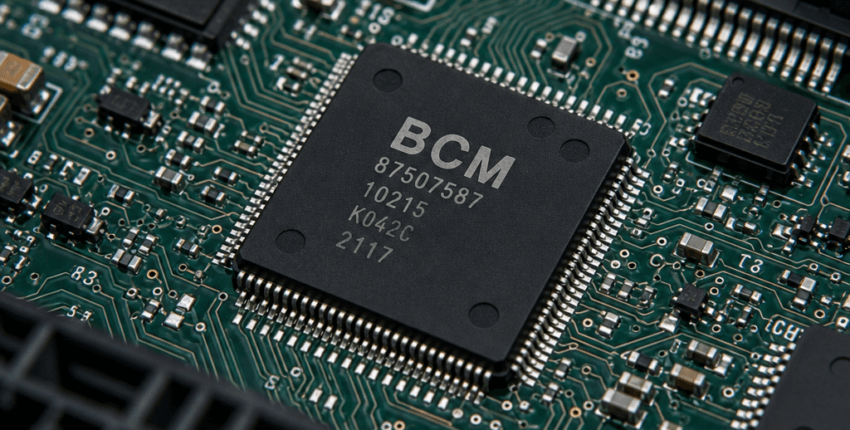
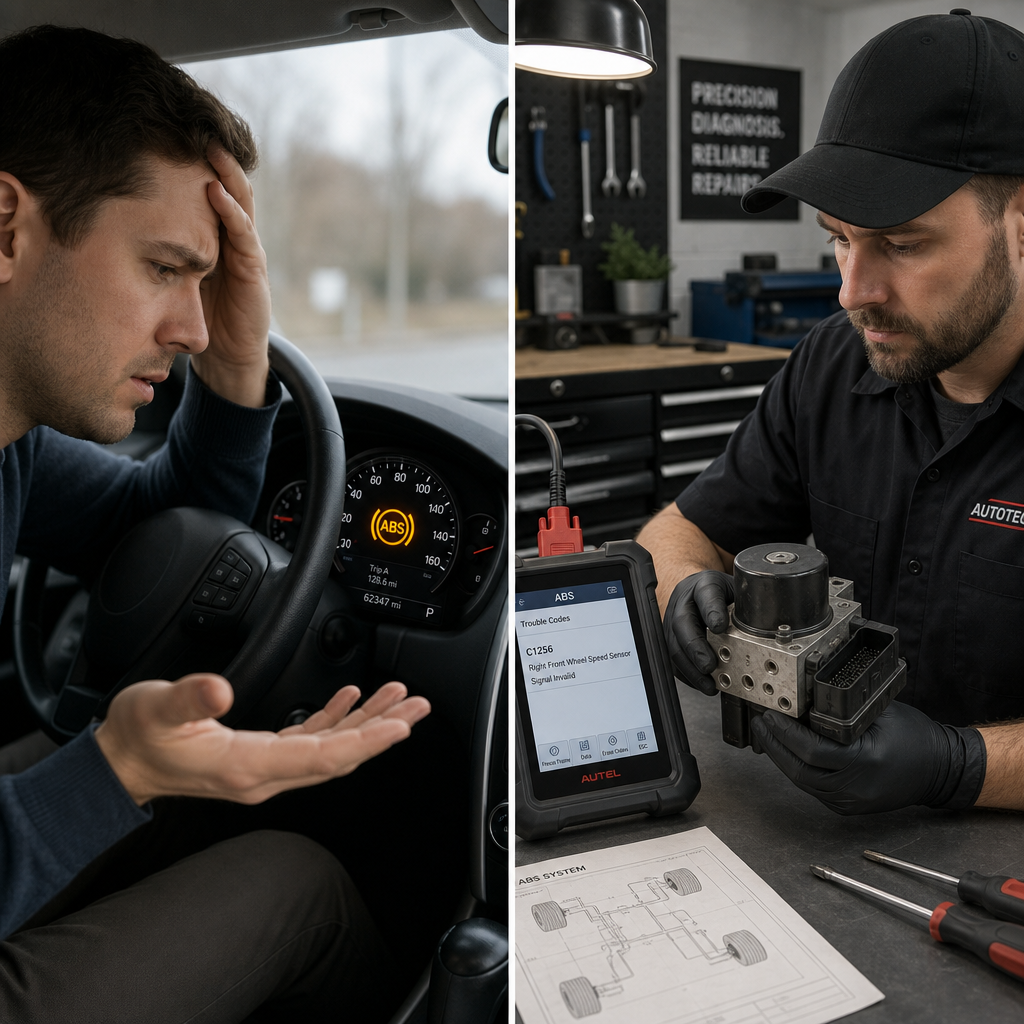
Your ABS warning light is on, your ADAS system is refusing to engage after a windscreen replacement, and the dealership wants $2,800 just to look at it. This is the reality for thousands of vehicle owners across North Queensland, and most of them have no idea that module programming Townsville specialists can resolve these faults for a fraction of dealer pricing. Electronic control modules fail silently, fail suddenly, and fail in ways that generic scan tools simply cannot diagnose. Understanding what is actually happening inside your BCM, ABS module, or ADAS control unit is the first step to getting it fixed correctly.
Table of Contents
- Quick Takeaways
- What Are BCM, ABS, and ADAS Modules and Why Do They Fail
- Common Failure Symptoms That Bring Vehicles Into Our Workshop
- Module Programming vs Replacement: What the Data Actually Shows
- Why Advanced Car Diagnostics in Townsville Changes Everything
- Vehicle Electronics Repair Townsville: The Process Explained
- Comparing Repair Approaches: Dealer, Generic Workshop, and Electronic Specialist
- Frequently Asked Questions
- References
Quick Takeaways
| Key Insight | Explanation |
|---|---|
| BCM failure is rarely the module itself | In practice, corroded grounds, voltage spikes, and water ingress cause most BCM faults. Replacing the module without fixing the root cause means the new unit fails within months. |
| ABS module coding is vehicle-specific | A replacement ABS module must be coded to the chassis number and paired to the hydraulic control unit. Generic workshops cannot do this without OEM-level software. |
| ADAS recalibration is mandatory after any glass or suspension work | Forward-facing cameras, radar sensors, and lidar units shift their detection angles with millimeter-level sensitivity. Skipping recalibration creates dangerous blind zones. |
| ECU cloning preserves your original data | Cloning copies the exact calibration, immobiliser data, and learned adaptations from your original unit to a replacement. No relearning period, no lost configurations. |
| Advanced diagnostics reveals what basic scan tools hide | A standard OBD2 reader shows surface fault codes. Factory-level diagnostic platforms read live data streams, module communication faults, and CAN bus errors that basic tools miss entirely. |
| Townsville’s climate accelerates electronic failure rates | Heat cycling between 35 and 45 degrees Celsius, combined with humidity and tropical storms, degrades PCB solder joints and connector seals faster than in southern Australian climates. |
| Second opinions on electronic faults save significant money | The data consistently shows that dealer quotes for module replacement are 40 to 70 percent higher than the actual repair cost when a specialist reprograms or clones the original unit. |
What Are BCM, ABS, and ADAS Modules and Why Do They Fail
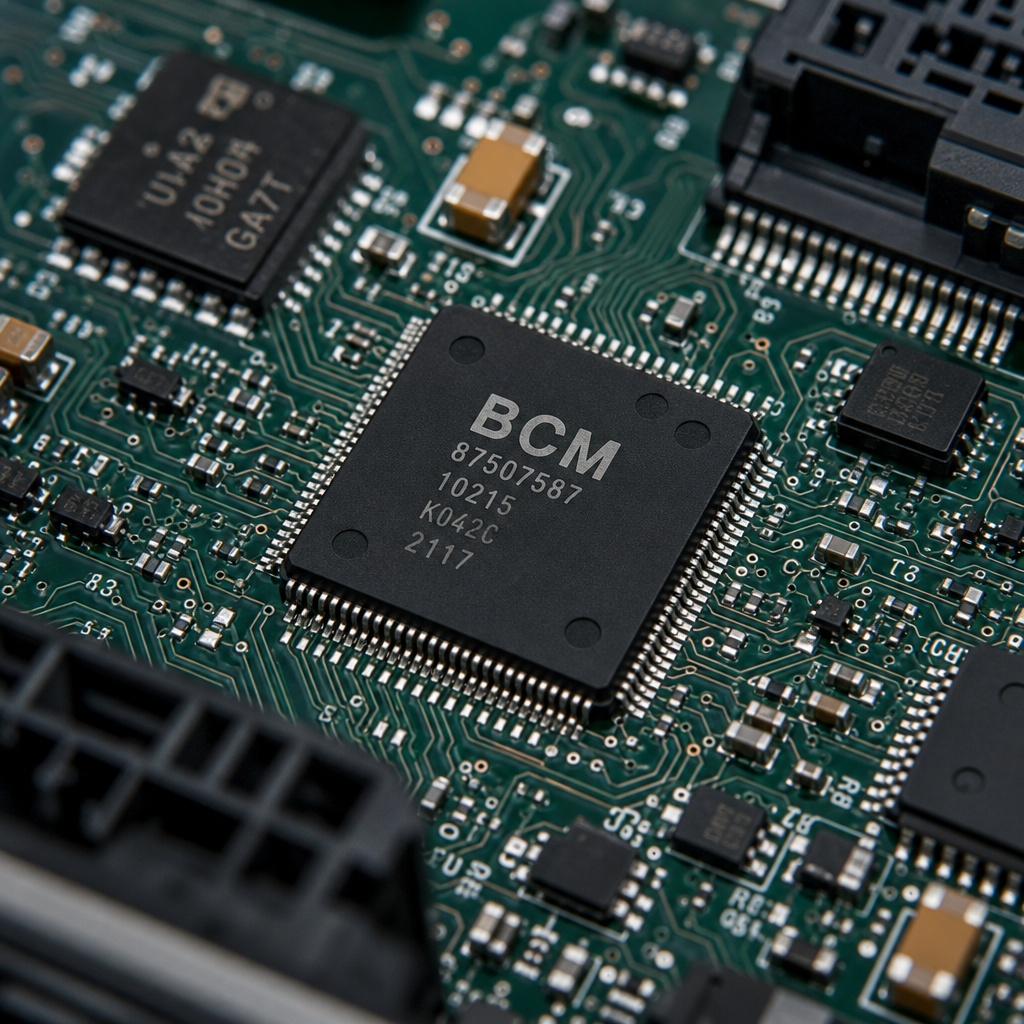
The Body Control Module (BCM) is the central nervous system for every non-powertrain electrical function in your vehicle. It manages power windows, central locking, lighting circuits, interior lighting, keyless entry, and communication between other modules on the CAN bus network. When it fails, symptoms appear random and confusing because so many unrelated systems go offline at once.
The ABS module, more precisely called the Anti-lock Braking System Control Module or Hydraulic Control Unit module, processes wheel speed sensor data and commands the solenoid valves inside the brake hydraulic unit. It also feeds data to electronic stability control, traction control, and on modern vehicles, the autonomous emergency braking component of the ADAS suite.
ADAS, which stands for Advanced Driver Assistance Systems, is the collective name for forward collision warning, lane keep assist, adaptive cruise control, blind spot monitoring, and rear cross-traffic alert systems. Each function has its own control module or shares a central domain controller. After a crash, a windscreen replacement, a wheel alignment, or even a suspension component swap, these modules require recalibration to restore accurate operation.
Why North Queensland Conditions Make Failures Worse
Townsville’s climate is not kind to automotive electronics. Ambient temperatures regularly exceed 40 degrees Celsius, and the humidity during the wet season creates condensation inside connectors and module housings that were never designed for tropical conditions. In practice, we see solder joint fractures on BCM circuit boards that occur purely from thermal expansion and contraction across the daily heat cycle.
Water ingress from storm flooding is another major cause. Vehicles flooded in the 2019 Townsville floods presented with corrosion-related module failures that appeared months after the event, once corrosion had crept far enough along the PCB traces. This delayed failure pattern catches many owners off guard.
Common Failure Symptoms That Bring Vehicles Into Our Workshop
The most common BCM fault presentation we see is intermittent central locking, where the locks engage and release randomly, combined with windows that operate on their own or refuse to move. Owners frequently spend months chasing individual window regulators or lock actuators before a proper diagnostic reveals the BCM is sending corrupted signals to every component simultaneously.
ABS module failures almost always trigger the ABS warning light and, on vehicles with integrated stability control, the ESC and traction control lights illuminate at the same time. A common mistake is assuming wheel speed sensors are faulty because those are the components the module monitors. Without proper live data analysis, technicians replace sensors that are working perfectly, charge accordingly, and the lights return within a week.
ADAS Faults After Repairs and Accidents
ADAS faults are increasingly common in our workshop because more vehicles on Townsville roads now carry these systems as standard equipment. The Ford Ranger, Toyota HiLux, Mazda CX-5, and Subaru Outback are among the highest-volume vehicles we recalibrate following windscreen replacements and suspension work.
A forward collision warning system that has not been recalibrated after a front-end repair may fail to detect objects at the correct distance, or it may generate false alerts that cause dangerous panic braking. Neither outcome is acceptable, and neither is visible to the driver until an incident occurs.
Pro tip: If your workshop does not have a static ADAS target board and a calibration-approved flat floor area, they cannot correctly calibrate your forward-facing camera systems. Always confirm calibration capability before authorising windscreen or front suspension work.
Module Programming vs Replacement: What the Data Actually Shows
Dealers default to module replacement because their service model is built around parts margins, not repair margins. A new BCM for a 2020 Toyota LandCruiser 200 series retails between $900 and $1,400 through dealer channels, plus fitting and programming labour. The same fault resolved through module repair and reprogramming costs substantially less and preserves all of the vehicle’s learned data.
ECU cloning is particularly valuable when the original module contains immobiliser data that cannot be transferred by standard programming alone. This includes most European vehicles running Bosch MED, Siemens SID, and Delphi DCM engine management platforms, where the immobiliser transponder data is locked inside the original ECU. Cloning copies the entire memory image, including all locked data, to a donor unit.
When Replacement Is the Right Call
Reprogramming and cloning are not always appropriate. Physical damage to the module’s microprocessor, burned MOSFET drivers, or shorted internal regulators require board-level repair or genuine replacement. The key is having the diagnostic capability to distinguish between a software or calibration fault and a hardware failure. That distinction is exactly where advanced diagnostics earns its value.
“The average modern vehicle contains between 70 and 100 electronic control units. A failure in any single unit can cascade communication errors across the entire network, creating fault codes in modules that are themselves functioning correctly.” Source: Society of Automotive Engineers (SAE International)
Why Advanced Car Diagnostics in Townsville Changes Everything
Generic workshops in Townsville operate with consumer-grade or entry-level professional scan tools. These tools read and clear fault codes. They do not perform module-to-module communication analysis, they do not read live CAN bus traffic, and they cannot access manufacturer-locked diagnostic functions that require OEM software subscriptions.
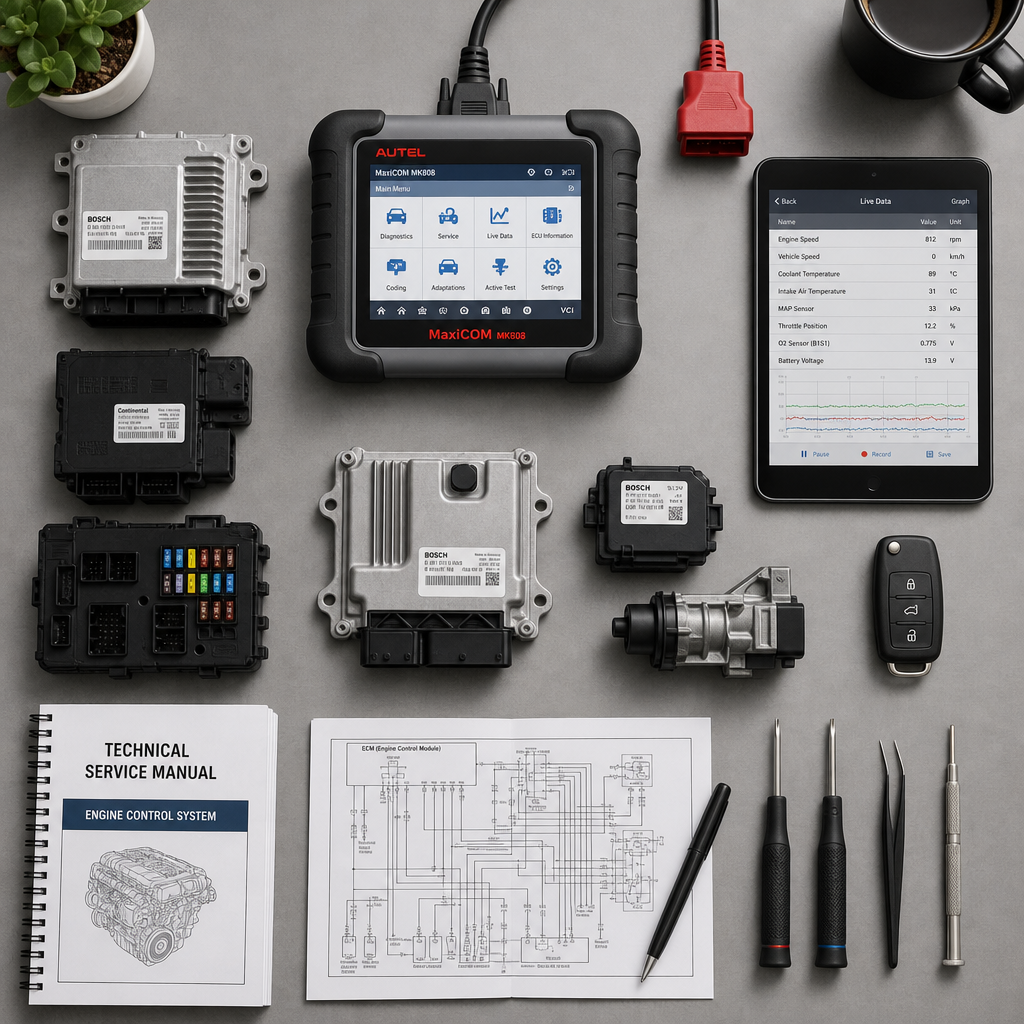
Advanced car diagnostics Townsville at the level we operate means using ODIS for Volkswagen Group vehicles, IDS and FDRS for Ford, Techstream for Toyota, GDS2 and MDI for General Motors, and Das and Xentry for Mercedes-Benz, among others. These are the same platforms used by the manufacturers themselves.
What Factory-Level Diagnostics Actually Reveals
In practice, factory diagnostic platforms expose fault histories that standard scan tools cannot read. They show the exact ignition cycle count at which a fault appeared, the ambient temperature at the time, the battery voltage during the event, and whether the fault is currently active or stored. This information changes the entire direction of a repair.
For ABS diagnosis specifically, live wheel speed sensor data at all four corners, read simultaneously during a road test, tells us within seconds whether a sensor is generating incorrect signals or whether the module is misinterpreting correct data. That distinction saves hours of diagnostic time and prevents unnecessary parts replacement.
Pro tip: Before any electronic module repair, request a full fault memory readout across all modules, not just the module showing the warning light. Faults in adjacent modules, particularly the instrument cluster, gateway module, and power distribution module, often trigger false positives in the module being blamed for the fault.
Vehicle Electronics Repair Townsville: The Process Explained
Vehicle electronics repair Townsville at an advanced specialist level follows a structured diagnostic process that generic workshops simply do not have the tools or training to replicate. The process begins with a full network scan, not a single-module scan, to map every module present on the vehicle and compare it against the manufacturer’s configuration for that chassis number.
Any module showing communication errors, missing from the network, or reporting internal faults is then subjected to deeper analysis. For BCM faults, this includes measuring supply voltage directly at the module connector, testing all ground return paths, and checking for CAN bus signal integrity using an oscilloscope. Voltage drops as small as 0.3 volts on a ground circuit can cause a BCM to generate dozens of false fault codes across all connected systems.
Transmission Module Programming
Electronic transmission repairs deserve specific mention because they represent one of the most misdiagnosed fault categories in our workshop. Automatic transmissions on modern vehicles, particularly ZF 8-speed units fitted to BMWs, Land Rovers, and Chrysler products, and the Ford 6F35 and 6R80 units, use a Transmission Control Module (TCM) that requires software updates and adaptive data resets after any internal mechanical repair.
A common mistake made by mechanical transmission shops is to rebuild the valve body, replace solenoids, and reinstall the unit without performing a TCM software update and an adaptive reset. The transmission then shifts harshly or hunts between gears because the TCM’s learned shift pressure tables no longer match the new components. Returning the vehicle to a specialist for TCM programming after the mechanical repair resolves this completely.
Comparing Repair Approaches: Dealer, Generic Workshop, and Electronic Specialist
| Repair Approach | Diagnostic Capability | Typical Cost Range and Outcome |
|---|---|---|
| Franchise Dealer | Full OEM diagnostic software access for their brand only. Cannot service competing brands. Default approach is module replacement, not repair or cloning. | Highest cost. BCM replacement plus programming typically $1,200 to $2,500. Original data may not be preserved if the module is replaced rather than repaired. |
| Generic Auto Electrical Workshop | Consumer or mid-range scan tools. Can read and clear fault codes. Limited live data. Cannot perform OEM-level module programming or ADAS calibration. | Lower initial quote, but high rate of misdiagnosis leading to unnecessary parts replacement. ADAS recalibration usually referred out or skipped. |
| Advanced Electronic Specialist (Twin Cities Auto) | Factory-level OEM software for all brands. Oscilloscope-based CAN bus analysis. Full ADAS calibration equipment. ECU cloning and module programming capability across all vehicle makes. | Mid-range cost with significantly higher first-fix rate. Module repair and cloning often 40 to 60 percent less than dealer replacement quote. All data preserved. |
The comparison above is not theoretical. It reflects what we see when vehicles arrive at our workshop after being through a dealer or a generic auto electrical shop. The most frequent scenario is a vehicle with two or three replaced modules that still has the original fault, because the root cause, whether a corroded ground strap, a leaking sunroof drain, or a failing CAN bus terminating resistor, was never identified.
Frequently Asked Questions
Can a BCM be reprogrammed without replacing it?
Yes, in most cases. If the BCM’s microprocessor and memory chips are physically intact, a specialist can reflash the module with updated software, correct calibration files, or restored configuration data. This approach preserves your vehicle’s existing immobiliser pairing and all learned system data. Physical damage from water corrosion or voltage spikes may require board-level repair before reprogramming is possible, but outright replacement is far less common than dealers suggest.
How long does module programming take for a BCM or ABS unit?
Programming alone, once the module is confirmed serviceable and the correct software files are sourced, typically takes 30 to 90 minutes depending on the vehicle platform. The diagnostic process preceding programming, including root cause investigation and network health checks, takes longer and should not be rushed. Expect a full BCM repair and programming job to require a half-day workshop booking at minimum.
Is ADAS recalibration really necessary after a windscreen replacement in Townsville?
It is not optional on any vehicle where the forward collision warning camera mounts to the windscreen. The adhesive mounting bracket for the camera shifts position when the glass is replaced, and even a one-degree deviation from the factory angle changes the system’s detection range at 100 km/h by several metres. Australian road authorities including the National Heavy Vehicle Regulator have published guidance on ADAS maintenance requirements. For safety and for insurance validity, recalibration is mandatory.
What vehicles do you service for module programming in Townsville?
All brands sold in Australia, including Japanese, European, American, and Korean manufacturers. This covers Toyota, Ford, Holden, Mitsubishi, Mazda, Subaru, Honda, Nissan, BMW, Mercedes-Benz, Volkswagen, Audi, Land Rover, Jeep, Chevrolet, Hyundai, Kia, and all commercial vehicles and 4WDs. Each brand requires its own OEM software platform, and we maintain active subscriptions to all of them.
My car was flooded during a storm. Can flood-damaged modules be saved?
Some can, and some cannot. The critical factor is how quickly the vehicle was disconnected from its battery after flooding occurred. Modules that had live voltage applied while submerged suffer immediate circuit damage. Modules that were unpowered during flooding may have repairable corrosion. We assess each module individually. ECU cloning is often the best path forward for flood-damaged vehicles because it allows the original data to be transferred to a dry replacement unit even if the original module’s housing is corroded.
How is Twin Cities Auto different from other auto electricians in Townsville?
The difference is factory-level diagnostic capability across all brands, combined with the ability to program, clone, and repair modules rather than simply replace them. Competitors in Townsville offering ECU services typically focus on a narrow range of vehicles or a single service type. We operate across all brands with OEM software and have the equipment to perform ADAS calibration, transmission module programming, and board-level ECU repairs in the same workshop. That breadth of capability is what makes us the most advanced workshop in Townsville.
Have you had a BCM, ABS, or ADAS fault misdiagnosed or quoted at an unexpectedly high price? Share your experience below so other Townsville drivers know what to expect.
References
- SAE International, the leading global body for automotive engineering standards and technical research on vehicle electronic systems
- Australian Government Department of Infrastructure, Transport, Regional Development and Communications, covering vehicle safety standards and ADAS regulatory guidance in Australia
- Statista global automotive statistics database, including data on electronic control unit adoption rates and vehicle electronics market growth
- National Heavy Vehicle Regulator, providing compliance and safety guidance relevant to electronic systems on commercial vehicles operating in Queensland
- Forbes technology and automotive section, covering trends in vehicle electronics, connected car systems, and the growing complexity of automotive repair