
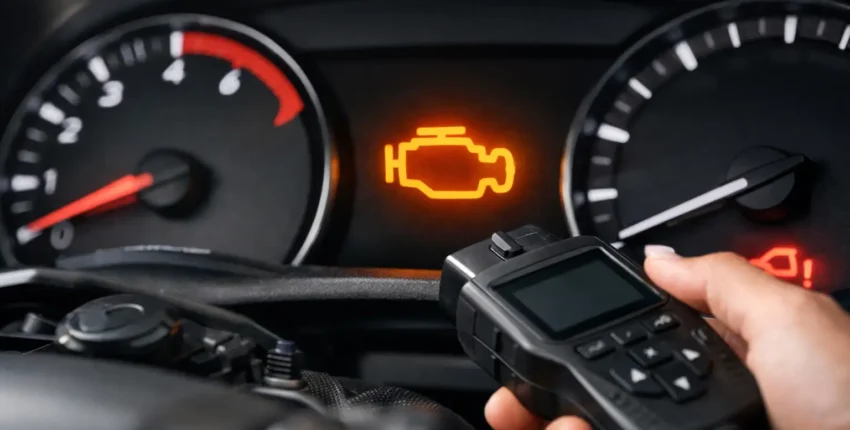
A warning light appearing on the dash just before the school run, a drive to work or a trip out of Townsville is never convenient. If you are asking, “why is my check engine light on?”, the short answer is that your vehicle’s computer has detected a fault affecting the engine, emissions system or another closely connected electronic system. The more useful answer is that the light is a starting point, not a diagnosis.
On modern petrol, diesel, hybrid and many European vehicles, dozens of sensors and control modules work together constantly. One reading outside its expected range can store a fault code and switch on the check engine light. Sometimes the cause is minor. Other times, continuing to drive can turn a manageable repair into a more expensive one.
Why is my check engine light on?
The check engine light, also called the engine management light, tells you the vehicle’s computer has found a problem it cannot ignore. It may relate to fuel delivery, ignition, air intake, emissions equipment, wiring, a sensor or communication between vehicle computers.
A diagnostic scan can retrieve the code that triggered the warning, but a code does not automatically identify the failed part. For example, a code suggesting a lean fuel mixture might be caused by an air leak, a fuel-pressure issue, a faulty sensor, damaged wiring or an engine management fault. Replacing parts based on the code alone can waste money and leave the light on.
Proper diagnosis combines the stored fault information with live data, electrical testing and a careful inspection of the vehicle. That is particularly relevant for late-model vehicles, BMWs, diesel engines and vehicles with complex electronic systems.
First, check whether the light is steady or flashing
The way the warning light behaves matters.
A steady check engine light
A steady light usually means the vehicle has recorded a fault but may still be safe to drive a short distance with care. Do not assume it can wait until the next service, though. Even if the car feels normal, a fault can affect fuel economy, emissions, performance or the life of components such as the catalytic converter or diesel particulate filter.
Arrange an inspection as soon as practical, especially if the light remains on after a few trips or returns after being cleared.
A flashing check engine light
A flashing light needs more urgent attention. It can indicate an active misfire, where one or more cylinders are not burning fuel correctly. Unburnt fuel can enter the exhaust and damage the catalytic converter very quickly.
If the light is flashing, reduce speed, avoid hard acceleration and find a safe place to stop. Do not continue a long journey or tow a load. If the engine is shaking, lacking power, overheating, producing unusual smoke or making new noises, it is safer to arrange assistance rather than drive it to a workshop.
Common reasons the engine light comes on
There is no single list that covers every make and model, but these are frequent causes seen in everyday vehicles around North Queensland.
A loose fuel cap or evaporative emissions fault
On some vehicles, a loose, damaged or missing fuel cap can trigger an emissions-related warning. Check that the cap is fitted correctly and the seal is not split. If the light does not go out after several normal drive cycles, the fault may be elsewhere in the evaporative emissions system.
Ignition or misfire problems
Worn spark plugs, failing ignition coils, injector faults, wiring issues and air leaks can all cause a misfire. You may notice rough idling, hesitation, poor acceleration or increased fuel use. A misfire is one fault worth acting on promptly because of the risk to the catalytic converter.
Sensor faults
Oxygen sensors, airflow sensors, crankshaft and camshaft sensors, temperature sensors and pressure sensors give the engine computer the information it needs to control fuel and timing. A failed sensor can cause the light to appear, but so can a wiring fault, a contaminated connector or a genuine mechanical issue creating an unexpected reading.
Townsville’s heat and humidity can be tough on under-bonnet electrical components over time. Heat cycling, vibration and moisture can affect plugs, wiring insulation and sensor connections, particularly as vehicles age.
Air intake, fuel or vacuum leaks
Your engine needs the right balance of air and fuel. A split intake hose, vacuum leak, blocked fuel filter, weak fuel pump or injector problem can upset that balance. The vehicle may run poorly, struggle under load or use more fuel than usual. These faults need testing rather than guesswork, as several different problems can produce similar symptoms.
Catalytic converter or emissions-system issues
The catalytic converter helps reduce harmful exhaust emissions. It can trigger a warning light if it is no longer working efficiently, but it is often the victim rather than the original cause. Long-term misfires, excessive oil consumption and incorrect fuel mixtures can damage it.
For diesel vehicles, issues with the EGR system, boost control, sensors or the diesel particulate filter can also bring on an engine warning. Frequent short trips may prevent some diesels from completing their normal DPF regeneration process. However, a warning light should not be treated as a reason to simply take the vehicle for a hard drive. The stored fault needs to be assessed first.
Battery, charging or electrical faults
A weak battery does not always illuminate the battery light alone. Low system voltage, poor earth connections or alternator problems can cause multiple warning lights and misleading fault codes on computer-controlled vehicles. This is where electrical testing is essential. Clearing codes without checking battery condition, charging voltage and circuit integrity can hide the symptom without fixing the cause.
What you can safely check before booking in
You do not need to pull apart the engine bay. Start with the basics: note whether the light is steady or flashing, check the fuel cap is secure, and pay attention to any changes in how the vehicle starts, idles, accelerates or uses fuel.
Also take note of other dash warnings. A check engine light together with a temperature warning, oil-pressure light, battery light or reduced-power message changes the urgency. Check your coolant level only when the engine is cold, and never remove a radiator cap from a hot engine.
Avoid disconnecting the battery to clear the light. On many vehicles, this can erase useful diagnostic information, reset learned settings and still fail to solve the underlying fault. It may also create further issues with radio codes, window settings or electronic systems.
Why a scan tool is only part of the answer
Many inexpensive scan tools can read generic engine codes. They can be useful for identifying that a fault has been stored, but they do not replace diagnosis. The code may point to a circuit, operating condition or system that needs further testing, rather than a particular replacement part.
Accurate fault-finding may involve checking live sensor readings, fuel pressure, ignition performance, wiring resistance, voltage drops, waveform patterns, intake leaks and module communication. On some vehicles, manufacturer-level equipment is needed to access all fault codes, run component tests, program replacement modules or carry out required relearns.
This approach takes more care upfront, but it can avoid the frustrating cycle of replacing a sensor, clearing the light and finding the same warning returns days later. It also gives you a clearer repair plan before work starts.
When the warning light cannot wait
Book a diagnostic inspection soon for any persistent check engine light, even if the car appears to drive normally. Seek more immediate help if the light flashes, the engine runs rough, power drops sharply, fuel smell is present, the vehicle overheats, or another critical warning light appears.
If your vehicle is under warranty, has recently had repairs or has a recurring warning after another workshop has looked at it, bring along any repair invoices and details of when the fault occurs. Information such as whether it happens only when cold, under acceleration, after refuelling or with the air-conditioning on can help narrow down an intermittent problem.
At Twin Cities Automotive, the diagnostic process is designed to identify the reason behind the warning, explain the findings in plain language and provide a repair recommendation before any work proceeds without your approval.
A check engine light is not a reason to panic, but it is your vehicle asking for attention. Acting early, and having the fault properly tested rather than guessed at, gives you the best chance of protecting your engine, avoiding unnecessary parts costs and keeping your car dependable for the roads ahead.