
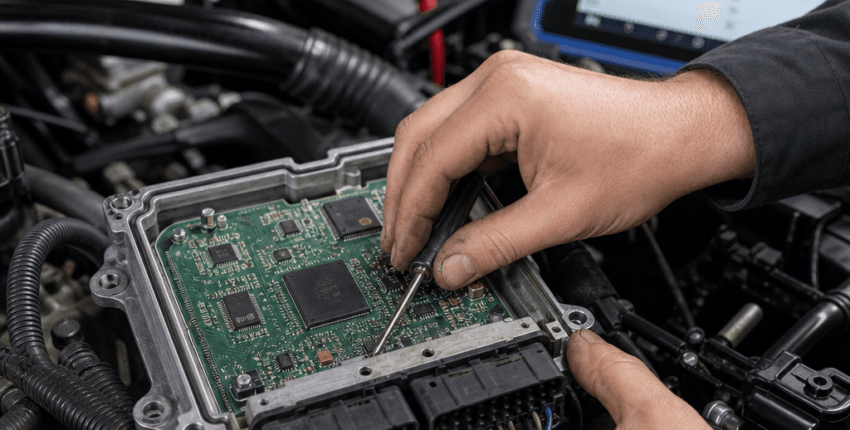
Modern vehicles arriving at workshops across Townsville carry anywhere from 50 to over 150 electronic control modules. When one fails, gets replaced, or needs recalibrating, module programming is the only path back to a fully functional vehicle. Most general workshops in Townsville simply cannot handle this work, and sending your vehicle to a dealer adds weeks and hundreds of dollars in unnecessary markup. This guide covers everything you need to know about module programming in Townsville, from what the process actually involves to how to identify a workshop with genuine capability, not just a scan tool and a glossy website.
Table of Contents
- What Is Module Programming in Modern Vehicles?
- Quick Takeaways
- ECU Programming vs. Module Programming: Knowing the Difference
- When Do You Actually Need Module Programming?
- Why Advanced Diagnostics Come Before Programming
- ECU Cloning Explained: When It Is the Right Call
- Comparison: Programming Approaches for Australian Drivers
- Electronic Transmission Module Programming
- How to Choose a Module Programming Workshop in Townsville
- Frequently Asked Questions
- References
What Is Module Programming in Modern Vehicles?
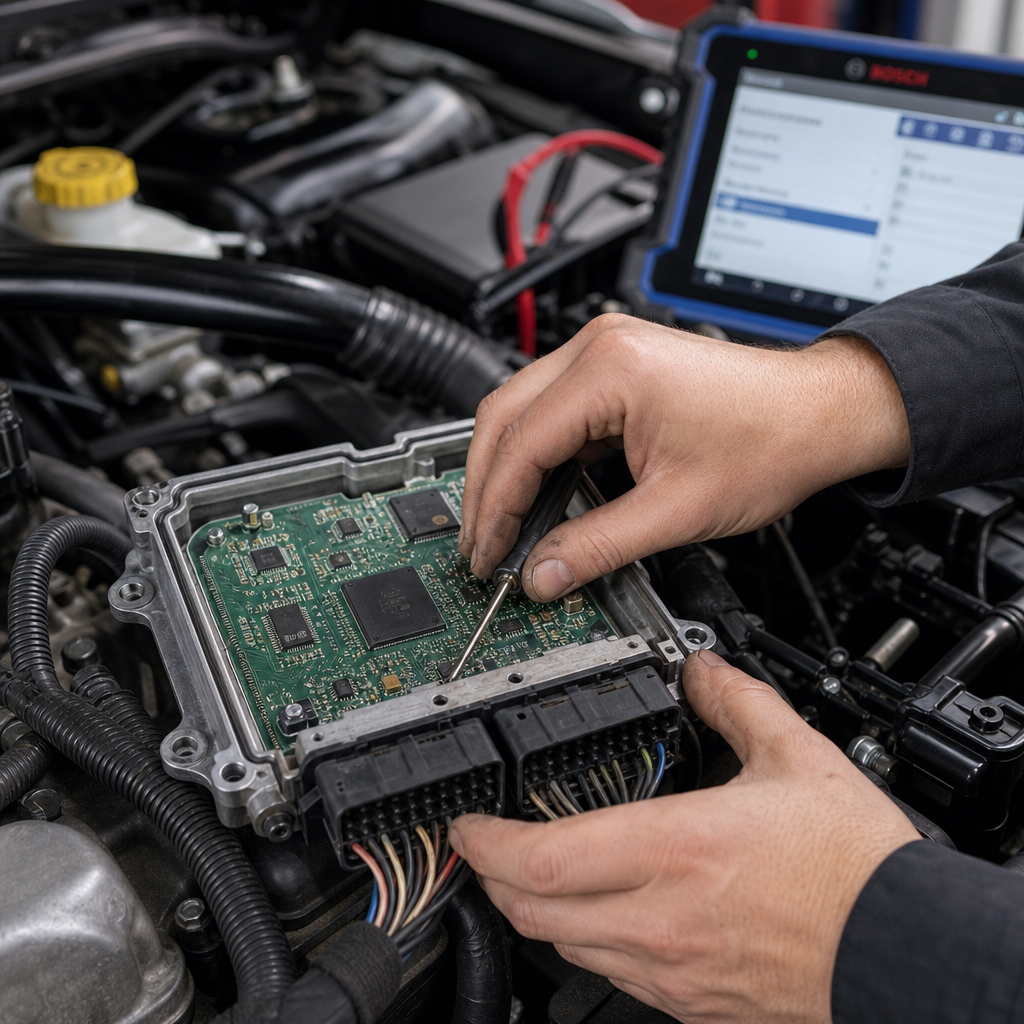
Module programming is the process of writing, rewriting, or calibrating software data inside an electronic control unit so that unit communicates correctly with the rest of the vehicle’s network. It is not simply plugging in a scanner and reading fault codes. That is diagnostics. Programming goes one step further: it changes what the module actually does.
Every module in a modern car, whether it controls the engine, transmission, body, airbags, or ADAS sensors, stores calibration data, variant coding, and operating parameters specific to that vehicle’s build configuration. When a module is replaced with a new or second-hand unit, that stored data must be matched to the vehicle. Without correct programming, the new module either refuses to communicate or creates cascading faults across other systems.
In practice, module programming requires manufacturer-level software or equivalent OEM access tools, a stable power supply during the flash process, and a technician who understands the vehicle’s network architecture. Getting any of these wrong does not just leave the fault unsolved. It can permanently brick a module that was otherwise salvageable.
Quick Takeaways
| Key Insight | Explanation |
|---|---|
| Module programming is not the same as diagnostics | Diagnostics identifies the fault. Programming corrects the module’s software or calibration data. Both steps are required, in that order. |
| All vehicle brands need this service | Ford, Toyota, Holden, BMW, Mercedes, Kia, Isuzu trucks. Every modern vehicle on Australian roads uses programmable modules across multiple systems. |
| Second-hand modules almost always need reprogramming | A salvage ECU pulled from another vehicle carries the donor car’s data. It will not work correctly in a different vehicle without full reprogramming or cloning. |
| Incorrect programming can brick a module permanently | Interrupted flash processes, wrong software versions, or voltage drops during programming can write corrupt data, rendering the module unrecoverable. |
| Transmission module programming requires specific calibration data | Electronic transmissions store shift maps, clutch pack adaptations, and torque converter data. Replacing the TCM without reprogramming causes immediate drivability problems. |
| Townsville drivers should not need to travel to Brisbane for this | A fully equipped local workshop with OEM-level access tools can handle module programming for all brands without the cost or delay of interstate referrals. |
| Advanced diagnostics before programming saves money | Programming a module that is not actually faulty wastes time and money. Proper diagnostics confirms which module failed and why before any programming begins. |
ECU Programming vs. Module Programming: Knowing the Difference
The terms are often used interchangeably, but they describe different scopes of work. ECU programming specifically refers to rewriting the software in the Engine Control Unit, the primary module that manages fuel delivery, ignition timing, emissions controls, and engine protection strategies. This is the module most people recognise by name.
Module programming is the broader category. It covers the ECU plus every other programmable unit on the vehicle network: the Body Control Module, the Transmission Control Module, the ABS module, the airbag control unit, instrument clusters, immobiliser modules, TPMS controllers, and increasingly, ADAS modules for cameras, radar, and parking systems.
Why the distinction matters for Townsville vehicle owners
When a workshop tells you they do ECU programming but cannot help with your ABS module or your instrument cluster, that is a capability gap, not a technicality. A vehicle’s electronic systems are deeply interconnected. A fault that appears to be engine-related sometimes traces back to a body module or a CAN bus communication problem. A workshop that only handles ECU work will miss those faults entirely.
At Twin Cities Auto in Townsville, the approach covers the full vehicle network, not just the engine controller. That distinction matters enormously when you are dealing with a fault that has already stumped two other workshops.
Pro tip: Before booking any module programming job, ask the workshop specifically which modules they can program and which brands of vehicle they hold software access for. A vague answer is a red flag.
When Do You Actually Need Module Programming?
There are several clear triggers that send a vehicle to a module programming specialist. Recognising them early prevents months of misdiagnosis and unnecessary parts replacement.
Module replacement after failure
When a module fails completely, the replacement unit, whether new or reconditioned, must be programmed to match the vehicle’s VIN, options configuration, and network parameters. Skipping this step means the replacement unit will likely throw communication faults and refuse to operate correctly. Some modules also need to be paired to other units on the network, such as the ECU and the immobiliser, before the vehicle will start at all.
Software updates and technical service bulletins
Manufacturers periodically release updated software for modules to fix known drivability issues, improve fuel economy, or address safety-related behaviour. In Australia, many of these updates are delivered through dealer service bulletins. A workshop with OEM tool access can apply these updates outside the dealer network, saving time and often money.
Fault codes that generic scan tools cannot resolve
If your vehicle is returning persistent fault codes that clear and return, or codes that point to modules with no obvious physical failure, the underlying issue is frequently a calibration error, a software version mismatch, or a module that has lost its configuration data. Generic scan tools read the symptom. They cannot fix the root cause. That requires proper car diagnostics in Townsville followed by targeted module programming.
Immobiliser and key programming
Modern vehicles use encrypted communication between the key transponder, the immobiliser module, and the ECU. Replacing any of these components without correct programming leaves you with a car that reads the fault but will not start. This is one of the most common programming jobs and one that dealers routinely overcharge for.
Why Advanced Diagnostics Come Before Programming
A common mistake made by workshops that offer programming as a standalone service is jumping straight to reflashing a module without confirming that the module is actually the source of the fault. This happens more often than the industry likes to admit, and it costs vehicle owners money for work that does nothing.
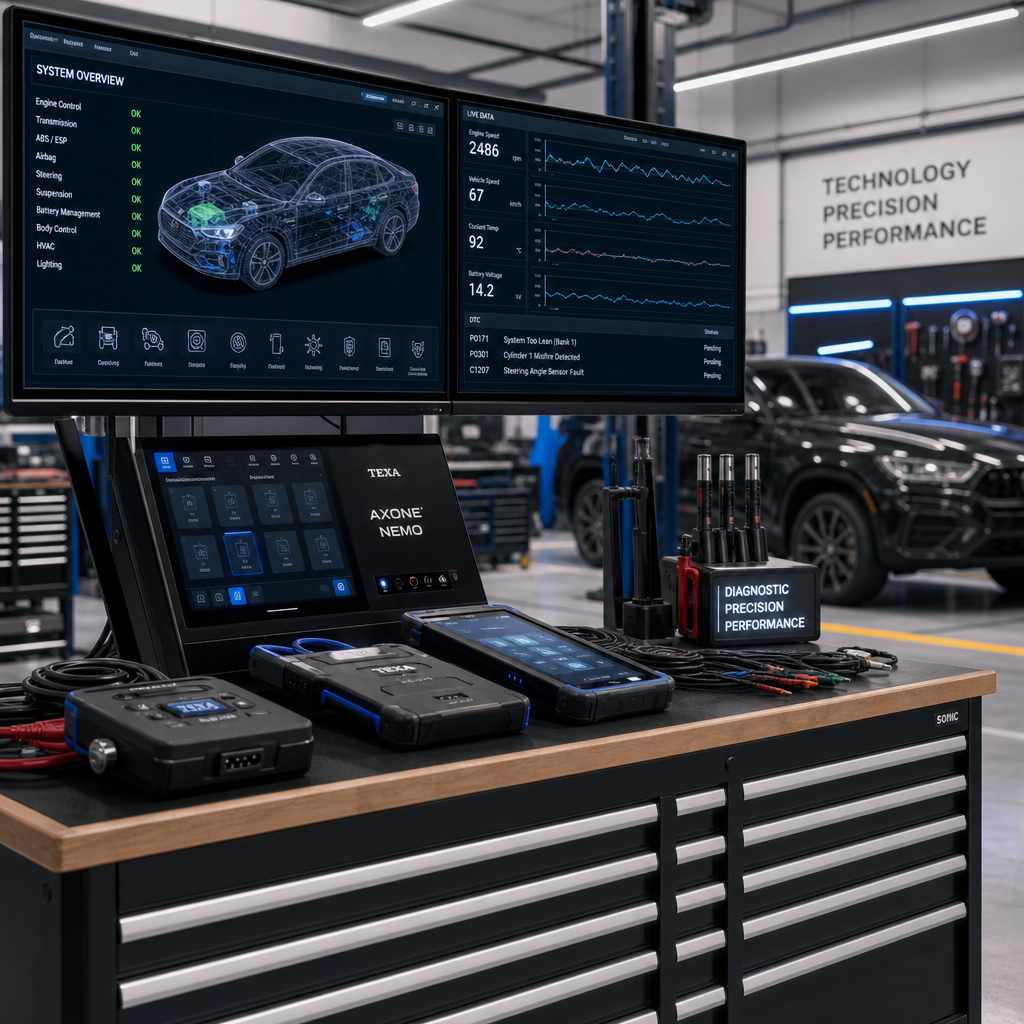
Proper advanced diagnostics means reading live data across the full vehicle network, checking CAN bus communication, measuring actual voltages at module connectors, and confirming the fault is reproducible under the right conditions. The data consistently shows that a significant proportion of apparent module failures are actually caused by wiring harness damage, poor earths, corroded connectors, or a different module sending bad data across the network.
“The biggest cost in automotive electronics is not the parts. It is the misdiagnosis that sends technicians down the wrong path. Proper network diagnostics before any programming decision saves both the workshop and the customer from avoidable rework.” – Automotive Electronics Council, technical guidance documentation.
In Townsville’s climate specifically, heat and humidity accelerate connector corrosion and insulation degradation. A module that appears to have failed internally has, in many cases, simply lost a clean power or earth connection. Programming a new module into a vehicle with an underlying wiring fault guarantees the new module will fail the same way.
This is exactly why Twin Cities Auto runs full advanced diagnostics before any programming decision is made. It is not an upsell. It is the only responsible sequence for electronic repair work.
Pro tip: Ask your workshop for a written diagnostic report before they recommend any module replacement or programming. If they cannot explain in specific terms which test confirmed the module is faulty, the diagnosis is incomplete.
ECU Cloning Explained: When It Is the Right Call
ECU cloning is the process of reading the complete data image from a faulty or damaged ECU, and writing that exact image onto a replacement unit. The result is a replacement ECU that carries the original vehicle’s VIN, security data, calibration maps, and configuration exactly as they were. The vehicle does not know a swap has occurred.
When cloning is the better option over new programming
Cloning is the preferred method when the original ECU holds unique calibration data that cannot be recreated from a fresh software flash. This includes vehicles where the original ECU has been modified, where manufacturer software support has ended for older models, or where the vehicle’s immobiliser system requires an exact match of security data that new programming cannot replicate.
It is also the faster and more cost-effective path when a new OEM unit is either unavailable or priced at a level that makes vehicle repair economically unviable. For older Holdens, earlier generation Toyotas, and some European vehicles that are no longer in active production support, cloning is often the only practical solution.
What cloning cannot fix
Cloning transfers data exactly, including any corrupted data that caused the original fault. If the ECU failed because of internal hardware damage, a corrupt memory sector, or a firmware bug, cloning that data across to a new unit transfers the same problem. This is why diagnostics must confirm the nature of the failure before deciding between cloning and fresh programming. Twin Cities Auto’s approach is to assess the failure mode first, then determine whether cloning, fresh programming, or ECU repair is the correct path.
Comparison: Programming Approaches for Australian Drivers
| Approach | Best Application | Key Limitation |
|---|---|---|
| ECU Cloning | Replacing a failed ECU on older vehicles, discontinued models, or vehicles with unique calibration data that cannot be sourced from the manufacturer | Transfers corrupted data if the original failure was software-based. Requires hardware-level access to both units. |
| OEM Software Reflashing | Applying manufacturer software updates, programming new replacement modules on current production vehicles, immobiliser pairing on modern platforms | Requires active manufacturer software subscription and compatible hardware. Not available for all older models. |
| Module Repair and Reprogramming | ECUs with repairable hardware faults such as failed driver circuits, damaged capacitors, or corrupted EEPROM chips where the module can be restored rather than replaced | Requires component-level electronics repair capability. Not every workshop can do this. Turnaround time varies by fault complexity. |
Electronic Transmission Module Programming
The Transmission Control Module is one of the most underestimated programming jobs in the workshop industry. Many technicians who are confident with engine ECU work have limited experience with TCM programming, and the consequences of getting it wrong are expensive.
Modern automatic and dual-clutch transmissions store learned adaptation data in the TCM. This includes clutch pack fill pressures, shift timing maps, torque converter lock-up thresholds, and solenoid duty cycle adjustments that the module has built up over the life of the transmission. When a TCM is replaced without correct programming, the transmission defaults to base calibration values that may not match the physical condition of that specific transmission.
Common symptoms of TCM programming faults
Harsh shifting, delayed gear engagement, transmission fault codes that appear immediately after a module change, and limp-home mode activation are all common presentations. In some cases, the transmission will refuse to shift out of a single gear entirely until the TCM is correctly programmed and the adaptation cycle is completed.
For Townsville’s population of working vehicles, including Ford Rangers, Toyota HiLux trucks, and the range of European vehicles used in the mining and construction sectors, TCM programming is a regular and necessary service. Twin Cities Auto handles electronic transmission repairs and programming across all brands, which is a capability most general workshops in North Queensland cannot match.
How to Choose a Module Programming Workshop in Townsville
Not all workshops that advertise module programming in Townsville have equivalent capability. The difference between a workshop with a single aftermarket scan tool and a fully equipped electronics specialist is significant, and it is not always obvious from a website or a price quote.
Questions to ask before handing over your vehicle
First, ask whether they hold OEM-level software access for your specific vehicle brand. Aftermarket tools can handle many common jobs, but they have significant gaps on European vehicles, newer Japanese platforms, and anything with advanced ADAS modules. Second, ask about their process: do they run full network diagnostics before programming, or do they program first and diagnose later? The latter approach is a strong indicator of limited capability.
Third, ask whether they can handle the full scope of the job. A workshop that can program your ECU but not your immobiliser module, or that can handle Toyota but not BMW, will need to refer part of the work elsewhere, adding time and coordination risk to your repair.
What sets Twin Cities Auto apart in Townsville
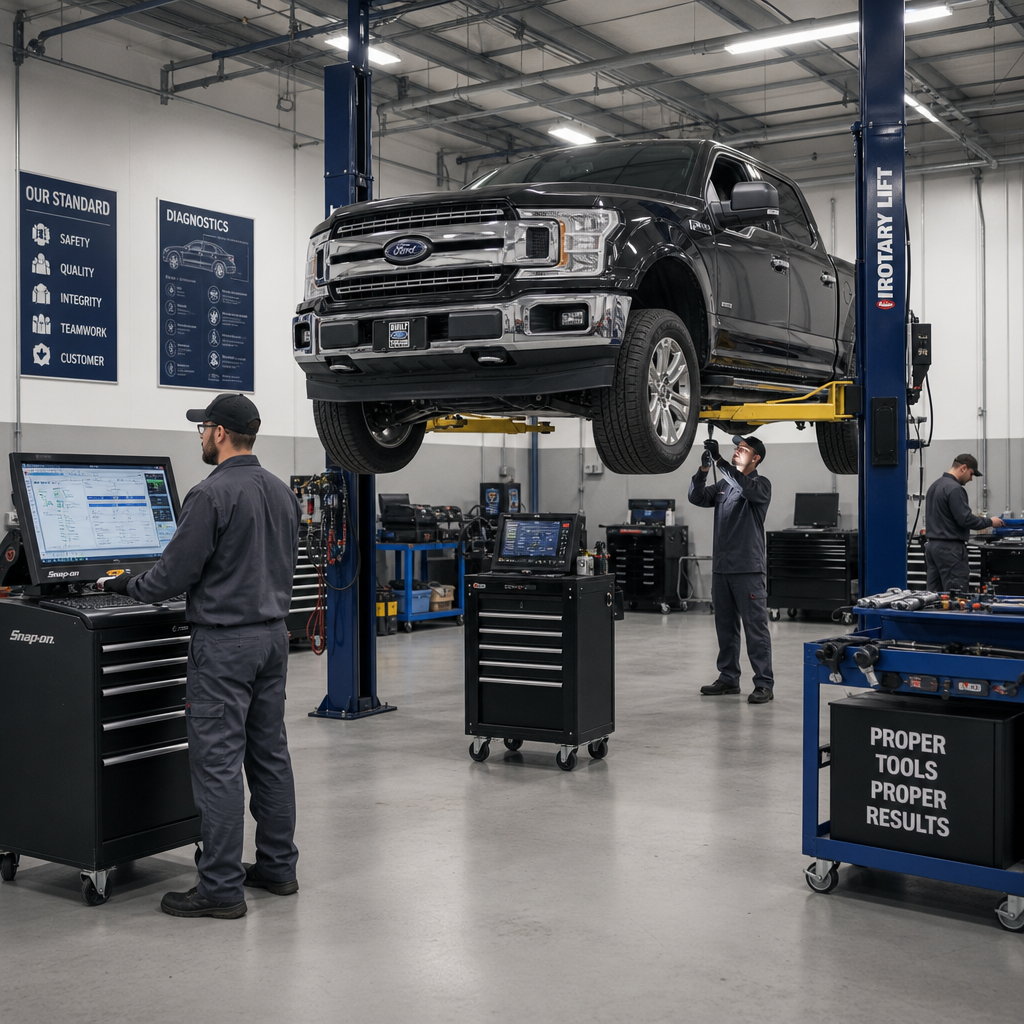
Twin Cities Auto operates as the most advanced automotive workshop in Townsville, covering all vehicle brands, all programmable modules, ECU repairs and cloning, electronic transmission programming, ADAS calibration, and full auto electrical repairs. The workshop holds access to manufacturer-level programming platforms across the full range of vehicles operating in Australia. This means a Townsville vehicle owner does not need to send their car to Brisbane or wait weeks for a dealer appointment to get complex module programming completed correctly.
Competitors in the Townsville market focus on narrower service ranges. Where some workshops offer tuning services alongside basic ECU work, Twin Cities Auto’s focus is entirely on accurate, factory-specification programming and repair across the full vehicle electronic system. That distinction matters when the fault is complex and the cost of getting it wrong is high.
Frequently Asked Questions
How long does module programming take in Townsville?
Most single-module programming jobs, including ECU reflashing, TCM programming, and BCM configuration, are completed within one business day once the vehicle is in the workshop. More complex jobs involving multiple modules, ECU cloning with hardware repair, or full ADAS recalibration may take two to three days depending on parts availability and the scope of diagnostics required beforehand.
Can any workshop in Townsville program modules, or do I need a specialist?
General mechanical workshops typically have basic scan tools that read fault codes but lack the OEM software access and hardware required for genuine module programming. For anything beyond basic code clearing, you need a specialist with manufacturer-level access. Attempting programming with inadequate tools risks corrupting the module permanently, turning a repairable fault into a full replacement job.
Is module programming the same as car tuning?
No. Tuning involves modifying a module’s calibration data to change performance parameters, typically increasing power output or altering shift behaviour. Module programming in the context of repair work means restoring or updating software to factory specification so the vehicle operates as the manufacturer intended. The tools and process overlap, but the goal is entirely different. Twin Cities Auto focuses on repair-specification programming, not performance modification.
What happens if module programming is interrupted partway through?
An interrupted programming flash, caused by a power drop, a software timeout, or a communication error, can write incomplete or corrupted data to the module. This often renders the module inoperable, a state commonly called a bricked module. Recovery from a bricked module requires specialised bootloader tools that bypass the module’s normal communication pathway to force a clean reflash. Not every workshop has this capability. This is why stable power supply management and correct tooling are non-negotiable during any programming job.
Does ECU cloning affect my vehicle’s registration or roadworthiness in Queensland?
ECU cloning performed to restore factory-specification software does not affect roadworthiness or registration status in Queensland, provided the cloned data reflects the vehicle’s correct build specification. Cloning that introduces performance modifications or alters emissions controls is a different matter and requires disclosure under Queensland transport regulations. For repair-specification cloning, the vehicle’s legal compliance status is unchanged.
How do I know if my vehicle needs module programming versus a simple repair?
The clearest indicator is a persistent fault code that returns after clearing, a fault that involves communication errors between modules on the CAN bus network, or a drivability problem that appeared immediately after a component replacement. Advanced diagnostics will confirm whether the fault is a software, calibration, or hardware issue. In practice, most electrical faults that have been misdiagnosed by multiple workshops turn out to involve a module programming or configuration problem rather than a purely mechanical failure.
Have you had a module programming job completed in Townsville? Share what the experience was like and whether the fault was fully resolved, because real-world feedback helps other North Queensland vehicle owners make better decisions about where to take their cars.
References
- Australian Government Department of Infrastructure, Transport and vehicle safety standards information for Australian-registered vehicles
- Statista global automotive electronics market data and growth statistics for the automotive technology sector
- SAE International technical standards and engineering research covering vehicle electronic systems and module communication protocols
- Forbes technology and automotive industry analysis covering the rise of software-defined vehicles and electronic repair complexity
- Queensland Department of Transport and Main Roads regulatory information covering vehicle modification and roadworthiness standards in Queensland